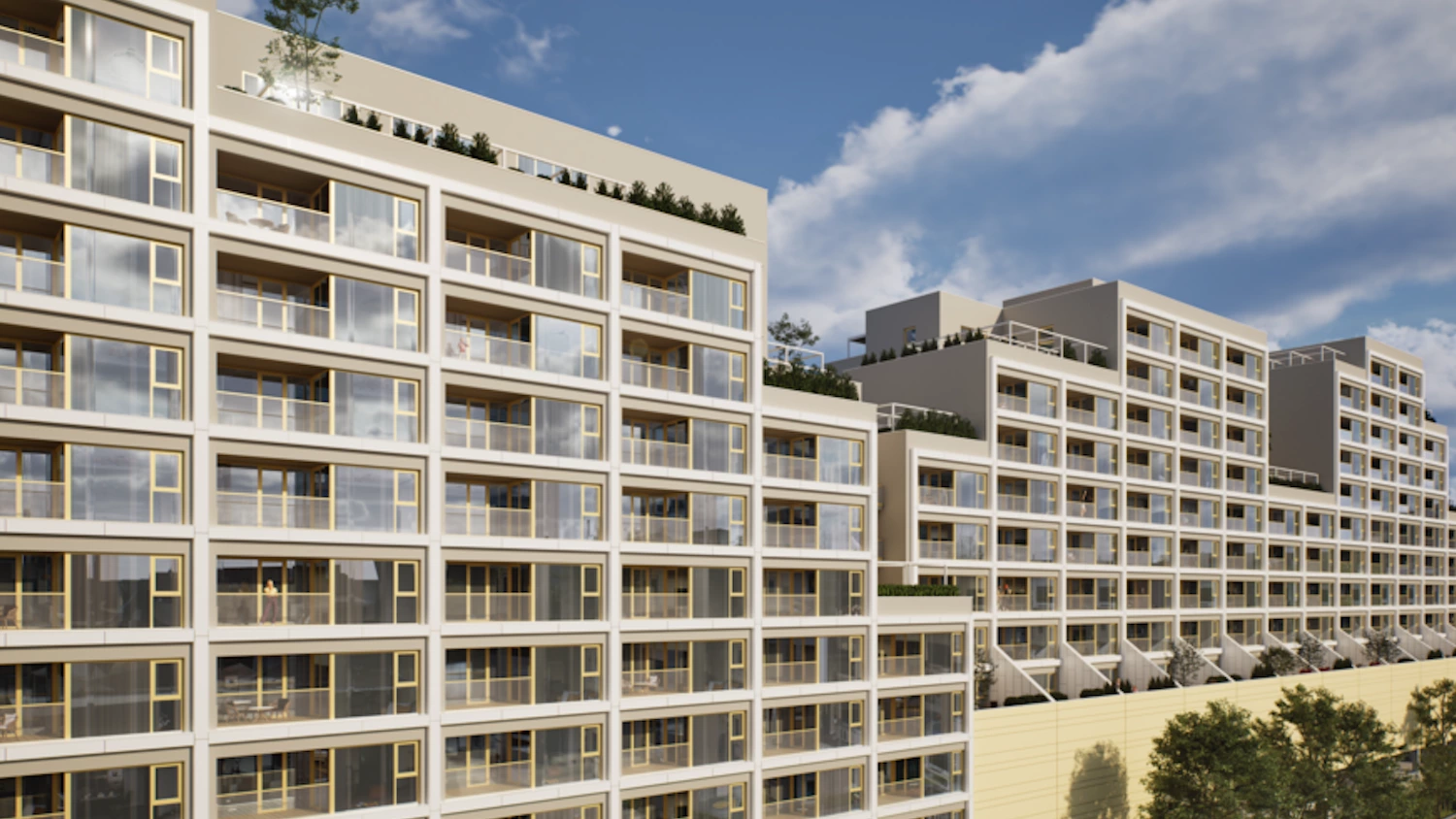
Bucharest's short-term rentals generate over €40 million annually

Business Forum
The latest edition of Crosspoint Real Estate's Hotel Market Report offers a comprehensive look at the current state of the Romanian hotel market, covering both traditional accommodation facilities and the development of short-term apartment rentals.

Bucharest's short-term rental market had a booming post-pandemic evolution. In 2023 alone, the industry generated revenues of €41.3 million, nearly double compared to 2019 and 46% over the performance recorded in 2022. With an average of 3,942 listings, this translated into an average yearly revenue of €10,500 and a monthly income of €875 per property. Supply-wise, there were fewer listings in 2023 than in the pre-pandemic 2019, the growth in income coming mainly from an increase of over 60% in the average daily rate (ADR), to €62.

2023 was the first post-pandemic year in which demand reflected growth in the tourism industry, without any extraordinary influencing factors. “If the growth in demand for short-term accommodation in 2022 was in part due to the wave of Ukrainian refugees, 2023 saw a return to typical market conditions, with most guests being leisure and business travelers, as the remaining refugees sought more permanent housing options,” says Ilinca Timofte, Head of Research at Crosspoint Real Estate.  

The market also experienced a notable shift in geographical distribution: whereas in previous years, the supply of short-term apartments was primarily concentrated in the city center, there is now a balanced availability of units for short-term accommodation throughout the city.

With an average of 4,550 listings and revenues of approximately €24 million recorded in the first half of this year, Bucharest's short-term rental industry is expected to outperform the previous year's level by more than 25%. The ADR has so far recorded a modest rise, to €63.7 per night, while the occupancy rate has remained similar to that recorded in 2023, at 55%.

“The industry isn't limited to being profitable only in Bucharest: Brașov, Constanța, and Cluj-Napoca are three regional markets where short-term apartment rentals yield significant returns. In fact, Brașov even slightly surpasses the capital in performance, with an average yearly revenue of €10,923 per property. This demonstrates that other Romanian cities are also thriving in the short-term rental market, offering considerable opportunities for property owners and investors,” adds Timofte.

With a total annual revenue of €9.3 million in 2023, the performance of the short-term property rental market in Cluj-Napoca is partially influenced by the city's hosting two of Romania's largest festivals, Electric Castle and Untold. July and August see the highest number of listings and the highest ADRs. At the other end of the spectrum, regional cities like Iași and Timișoara are still emerging in the short-term rental market and have fewer listings available. Consequently, these cities tend to record lower revenues compared to more established markets.

RECOMMENDED
Bucharest apartment sales drop 18.6% in early 2026
Real estate

Bucharest apartment sales drop 18.6% in early 2026

The residential market in Bucharest started 2026 with an 18.6% decline in apartment transactions in January-February compared to the same period last year, while in Ilfov County the decline was 10.9%, according to an analysis by Crosspoint Real Estate,

Cordia starts new resi investment in Bucharest
Real estate

Cordia starts new resi investment in Bucharest

Cordia Romania, a member of the Futureal Group, has acquired an 8,179 sqm land plot in Bucharest from Bog'Art Place and has begun construction on Centropolitan, a residential project featuring 274 apartments and 3,345 sqm of integrated retail space.

Finance takes the lead in Bucharest office demand
Real estate

Finance takes the lead in Bucharest office demand

The Bucharest office market saw last year a shift in hierarchy regarding the sectors generating the most transactions, according to a study by Crosspoint Real Estate. Companies in the banking and financial sector accounted for 25% of the gross leasing volume in Bucharest, surpassing the IT sector (23%) for the first time.

Bucharests low office costs attract Global Capability Centres
Real estate

Bucharest's low office costs attract Global Capability Centres

Bucharest is emerging as a primary destination for multinational corporations looking to establish Global Capability Centres (GCCs) due to lower office leasing rates and salary costs, finds a study conducted by Savills and CoreNet Global.

Finance displaces tech in Bucharest office demand
Real estate

Finance displaces tech in Bucharest office demand

After a period dominated by the tech sector, H1 2025 saw a notable surge in interest from the financial-banking sector in the Bucharest office leasing market, according to data by Crosspoint Real Estate.

RECOMMENDED FROM THE HOME PAGE
Hidroelectrica, Siemens sign power transformer deal
Energy

Hidroelectrica, Siemens sign power transformer deal

Hidroelectrica has completed the procurement procedure for seven 216 MVA, 15.75/242 kV transformers, equipment necessary for safe operation and continued modernisation of the Porțile de Fier I Hydroelectric Power Plant.

Industry

FlixBus Romania hits 300,000 domestic passengers milestone

Eight months after Romania liberalised intercounty transport, FlixBus reports over 600,000 passengers have used its national and international routes, with more than 300,000 travelling domestically between July 2025 and February 2026.

READ MORE
Business Forum  |  26 March, 2026 at 7:02 PM