
Romania's construction volume close to new record in 2025

Business Forum
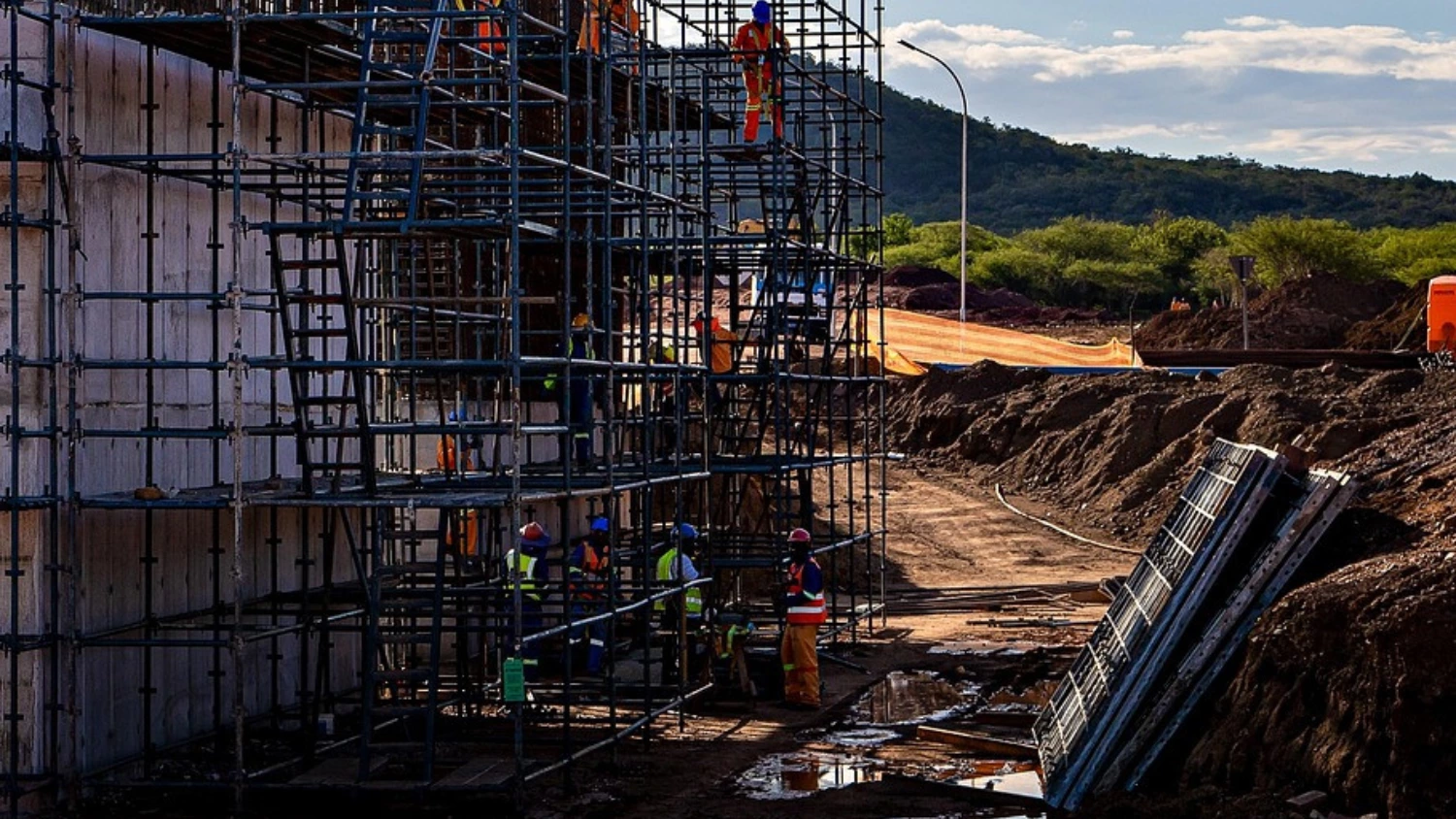
Romania's construction market reached near-record levels in 2025, with work volumes growing almost 8% in the first eleven months compared to the previous year, according to Colliers' annual report. The sector now represents 9% of GDP, the highest share in the European Union and well above the 5% EU average.

The growth is driven primarily by civil engineering projects, including publicly funded infrastructure and major hospitals, which hit record levels in 2025. Non-residential construction increased over 11% compared to 2024, approaching 2023 peak levels, while residential construction grew more than 12%. Overall construction activity reached almost double pre-pandemic levels.

"The data clearly show that Romania's construction market is operating at a very high pace, close to historic highs, with this momentum driven primarily by large-scale public projects," explains Alexandru Atanasiu, Partner and Head of Construction Services at Colliers. "We are referring to volumes of work - the intensity of activity and number of labour hours - rather than the financial value of investments, which makes these results all the more remarkable."

However, the sector faces mounting cost pressures. A new carbon tax on construction materials imported from outside the EU, effective from 2026, could increase costs by 10-15%. Given Romania's heavy reliance on steel, aluminium and other metal imports, construction companies are unlikely to absorb these costs fully. Copper prices rose over 40% in 2025, reaching historic highs, while other base metals also recorded significant increases.

The construction workforce reached a record 462,000 employees in July 2025, up 1% year-on-year. Despite wage pressures in a tight labour market, Romanian construction salaries remain below other CEE countries, providing companies some flexibility. Colliers expects a more balanced market evolution in 2026, with activity continuing to be supported by public investment, provided political stability is maintained.

RECOMMENDED
Romanias economy grows 0.7% in 2025
Economy

Romania's economy grows 0.7% in 2025

Romania's economy grew 0.7% in real terms in 2025 compared to 2024, though GDP fell 1.9% in Q4 compared to the previous quarter, according to provisional data published by the National Institute of Statistics (INS).

CEE property markets set for growth in 2026 amid supply gaps and modernization
Real estate

CEE property markets set for growth in 2026 amid supply gaps and modernization

Colliers has published a new report focusing on CEE, examining economic and real estate trends across Bulgaria, Czech Republic, Hungary, Poland, Romania and Slovakia. The study shows that 2025 brought moderate economic recovery, easing inflation and rising focus on sustainability, while real estate markets were shaped by modernization, limited new office supply, strong logistics demand and retail park expansion.

Romanias logistics market records 64% demand surge on nine months
Real estate

Romania's logistics market records 64% demand surge on nine months

Romania's industrial and logistics sector recorded strong growth in the first three quarters of 2025, driven by activity in the Bucharest area. Total leasing demand reached almost 640,000 sqm between January and September, up 64% compared to the same period last year, according to Colliers data.

RECOMMENDED FROM THE HOME PAGE
Electrica secures grid permits for 700 MWh of storage
Energy

Electrica secures grid permits for 700 MWh of storage

Energy company Electrica informs investors and the capital market that it has obtained the technical grid connection permits (ATR) for 17 new battery energy storage projects (BESS), with a total capacity of approximately 700 MWh.

Energy

Romanian grid operator to support peak power consumption during heatwave

Romania's national electricity transmission network operator, Transelectrica, has halted scheduled maintenance shutdowns to ensure the grid operates at maximum capacity during an ongoing extreme heatwave. The preventive measures aim to mitigate operational risks associated with severe weather conditions.