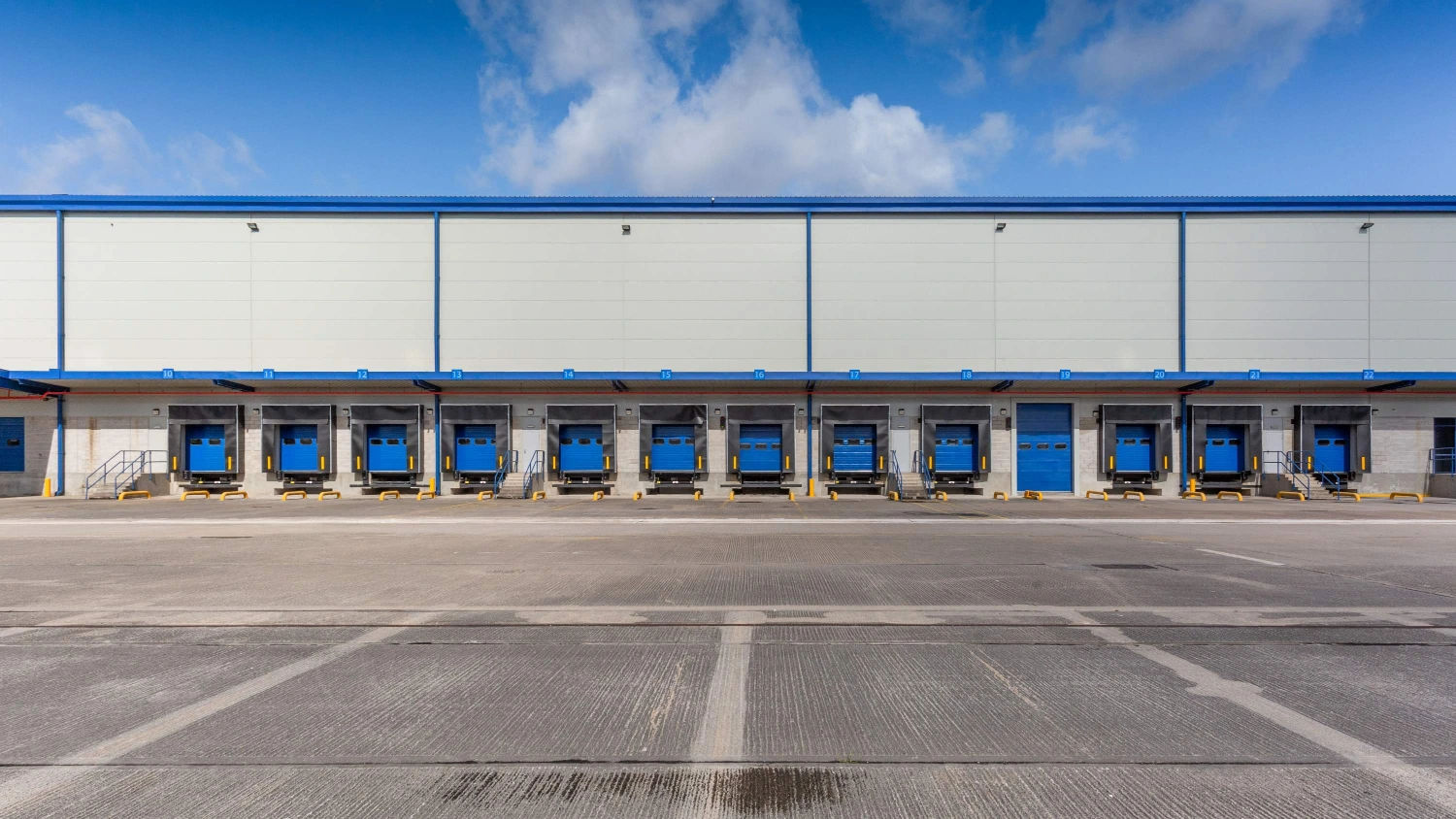
Romania's industrial and logistics market has slowed in 2026 following a record 2025. In the first nine months, publicly reported leasing transactions reached approximately 450,000 sqm, around 30% below the level recorded in the same period last year, according to Colliers data. Bucharest-Ilfov accounts for nearly 60% of the total volume, though infrastructure development is beginning to reshape the demand map across the country. Transaction volumes remain close to the ten-year average for the first three quarters and are more than 40% above the 2017–2019 average.
Romania's residential market slowed in the first half of 2026 following several years of strong growth, though data does not indicate a major correction, according to Colliers' half-year report. Nationwide, apartment sales declined by approximately 9%, while Bucharest ended the period with around 2% fewer transactions than in the same period of 2025, recovering much of the ground lost after a weak start to the year. The market remains above pre-pandemic levels, but high inflation, expensive borrowing and pressure on household budgets are making buyers more attentive to prices, the total cost of home ownership and development quality.
Romania's construction market grew by approximately 12% in the first five months of 2026 compared with the same period last year, according to a Colliers report on the real estate market in the first half of 2026. The residential segment recorded the strongest growth at approximately 16%, followed by infrastructure projects, including roads, railways and hospitals, which rose by around 14% and account for more than half of total sector activity. The non-residential segment grew more slowly, at approximately 6%, as financing remains expensive and private investors are more cautious. The report notes that these figures measure the actual volume of construction works rather than the financial value of investments.
Bucharest's residential market recovered much of the ground lost after a weak start to 2026, ending the first half with apartment transactions down just 2% year-on-year, according to Colliers. Developers are also accelerating preparations for new projects, with the net floor area authorised for residential buildings in Bucharest increasing 3.6-fold in the first five months — the strongest pace in five years. Nationwide, however, apartment sales fell 9%, reflecting continued caution amid inflation, high financing costs and pressure on real incomes. Trends varied across regional cities: Cluj-Napoca recorded a 16% fall in transactions and Iași dropped 11%, while Timișoara posted a modest 3% increase.
Romania continues to gain visibility on the European industrial and logistics investment map, at a time when companies are looking for competitive markets for manufacturing, warehousing and distribution. Two-thirds of the European regions with the strongest profile for manufacturing activities are located in just four countries – Poland, Spain, Romania and France – according to the report "ExCEEding Borders: CEE & Iberia: Driving Europe's Industrial Transformation", published by Colliers.
Sustainability criteria are playing an increasing role when banks finance real estate projects in Romania, while buildings that meet green finance standards can obtain better terms. These are the findings of a study carried out by Colliers on the local market, based on responses from four commercial banks, which together hold more than half of the Romanian banking system's assets, and two multilateral development banks active in the real estate sector. The clearest rule identified for new buildings is the NZEB-10% standard, applied by all institutions analysed. All six require the primary energy demand of a new building to be at least 10% below the national NZEB threshold, and a project that does not meet this standard may still be financed, but the loan will generally not be classified as green finance.
Office markets across the six largest CEE capital cities, Prague, Warsaw, Budapest, Bucharest, Bratislava, and Sofia, have entered a new phase characterized by a severe supply crunch.
Romanian construction activity increased by over 6% in the first two months of 2026, following a record 2025, and remained the country's only major economic sector showing growth in April, according to Colliers analysis based on Eurostat data.
Leasing transactions for modern office space in Bucharest increased by 14% in Q1 2026 compared to the same period last year, while new demand rose by 24%. However, the market remains below pre-pandemic levels, according to Colliers data.
Administrative costs for modern office buildings in Romania are set to rise by approximately 10% in 2026 compared to last year, according to Colliers. The increases stem from higher property taxes, inflation and rising wages, with utility costs excluded as these are typically billed separately.
CEE real estate investment rebounded strongly in 2025, with volumes reaching €11.6 billion across six core markets, representing a 31% year-on-year increase according to Colliers.
Nearly 9 out of 10 large companies in Romania plan to maintain their current office footprint in 2026, signalling a shift from expansion to optimization, according to a Colliers survey of 101 companies.
Leasing demand for logistics space in Romania dropped 56% to approximately 80,000 sqm in Q1 2026 versus the same period of 2025, according to a report by Colliers.
Romania's office investment market recorded its strongest first quarter in a decade, with transactions totalling approximately €130 million, according to Colliers data. This represents more than triple the average for January-March periods over the past 10 years and signals renewed investor interest despite economic and geopolitical uncertainties.
Romanians are spending more on cinema experiences as economic pressures drive a shift towards leisure-oriented consumption. Cinema revenues reached approximately €63 million in 2025, up 16% compared to 2024 and around 10% above pre-pandemic levels, according to Colliers data.
Nearly half of companies in Romania expect employees to come to the office three to four days a week in 2026, as hybrid working becomes more structured, according to a survey conducted by Colliers among 101 companies.
Romania's green certification market remained active in 2025, with over 4.6 million sqm of real estate space receiving sustainability credentials despite European changes to reporting obligations.
New housing deliveries and transaction numbers fell by approximately 5% in 2025 compared to the previous year, according to Colliers' annual report. While deliveries dropped to their lowest level since 2017, sales volumes remained around 20% above the pre-pandemic average.
Romania's hospitality industry recorded the highest number of hotel nights in three decades during 2025, according to Colliers' annual report. Despite a challenging economic backdrop in H2 2025, interest in Romanian travel remained strong, particularly among foreign tourists who generated nearly 5 million overnight stays.
Romania's construction market reached near-record levels in 2025, with work volumes growing almost 8% in the first eleven months compared to the previous year, according to Colliers' annual report. The sector now represents 9% of GDP, the highest share in the European Union and well above the 5% EU average.
Bucharest is consolidating its position within the Central and Eastern European (CEE) real estate market, combining rental growth across major asset classes with investment yields that remain well above Western European levels, according to the DNA of Real Estate Europe Q2 2026 report published by Cushman & Wakefield. Across Europe in Q2 2026, prime office rents rose 4.5% year-on-year, retail rents increased 3.0%, and logistics rents grew 2.4%, while investors remained selective as yield movements pointed to a more balanced market following the repricing cycle of recent years.
Energy company Electrica informs investors and the capital market that it has obtained the technical grid connection permits (ATR) for 17 new battery energy storage projects (BESS), with a total capacity of approximately 700 MWh.
The European Retail Banking Radar, Kearney's latest study now in its 18th edition, shows that Europe is entering a period of normalisation following the conditions of 2023–2025. For Romania, the challenge extends beyond the normalisation of interest rates.
Romania's national electricity transmission network operator, Transelectrica, has halted scheduled maintenance shutdowns to ensure the grid operates at maximum capacity during an ongoing extreme heatwave. The preventive measures aim to mitigate operational risks associated with severe weather conditions.
Digi Spain has announced its intention to launch an initial public offering (IPO) on the Spanish stock exchanges, aiming to raise approximately €150 million.