Deloitte Technology Delivery Center announces the appointment of Emilia Dumitrescu as Managing Director, effective June 2026. She has also been promoted to Deloitte Partner and succeeds Marcus Williamson, Partner, Deloitte UK, upon the completion of his three-and-a-half-year mandate.
The world economy loses around €25.4 trillion in value annually, equivalent to almost 31% of global GDP, due to inefficient resource management, according to a report conducted by Deloitte and Circle Economy. This means that for every three euros created, one euro is lost.
Romania emerged as the most dynamic mergers and acquisitions (M&A) market in Central and Eastern Europe (CEE), recording 9% growth in transaction numbers during 2025.
Construction costs and plot acquisition have become the primary concerns for real estate developers in Central Europe in 2026, affecting 27% and 25% of companies respectively, according to a Deloitte report.
Commercial real estate companies remain optimistic about 2026, with 83% expecting revenue growth, according to a Deloitte report. This represents a slight decline from 88% last year, while 68% plan to increase expenses in 2026.
Insurers are experiencing uncertainty from economic pressures, geopolitical volatility and increasing catastrophic events, combined with higher customer expectations, according to the Deloitte 2026 global insurance outlook.
While the EU discusses applying handling fees for parcels worth less than €150 from non-EU countries, Romania and Italy have decided to implement it this year.
Holiday spending is decreasing by about 10% this year compared to 2024, as three-quarters of consumers (77%, up from 69% in 2024) expect higher prices on holiday goods.
Romanian companies Finqware, Questo are among the fastest growing technology start-ups in the region, being included in the 2025 Deloitte Technology Fast 50 Central Europe ranking.
Family business revenues are projected to reach $29 trillion by 2030, reflecting an 84% increase compared to 2020, according to a Deloitte study. These businesses currently account for 19% of all business revenue globally and represent more than 18,000 entities worldwide.
The European property market has begun to adapt to new conditions. The latest data, based on a survey in 28 countries across Europe, has clearly confirmed this, according to the 14th edition of the Deloitte Property Index.
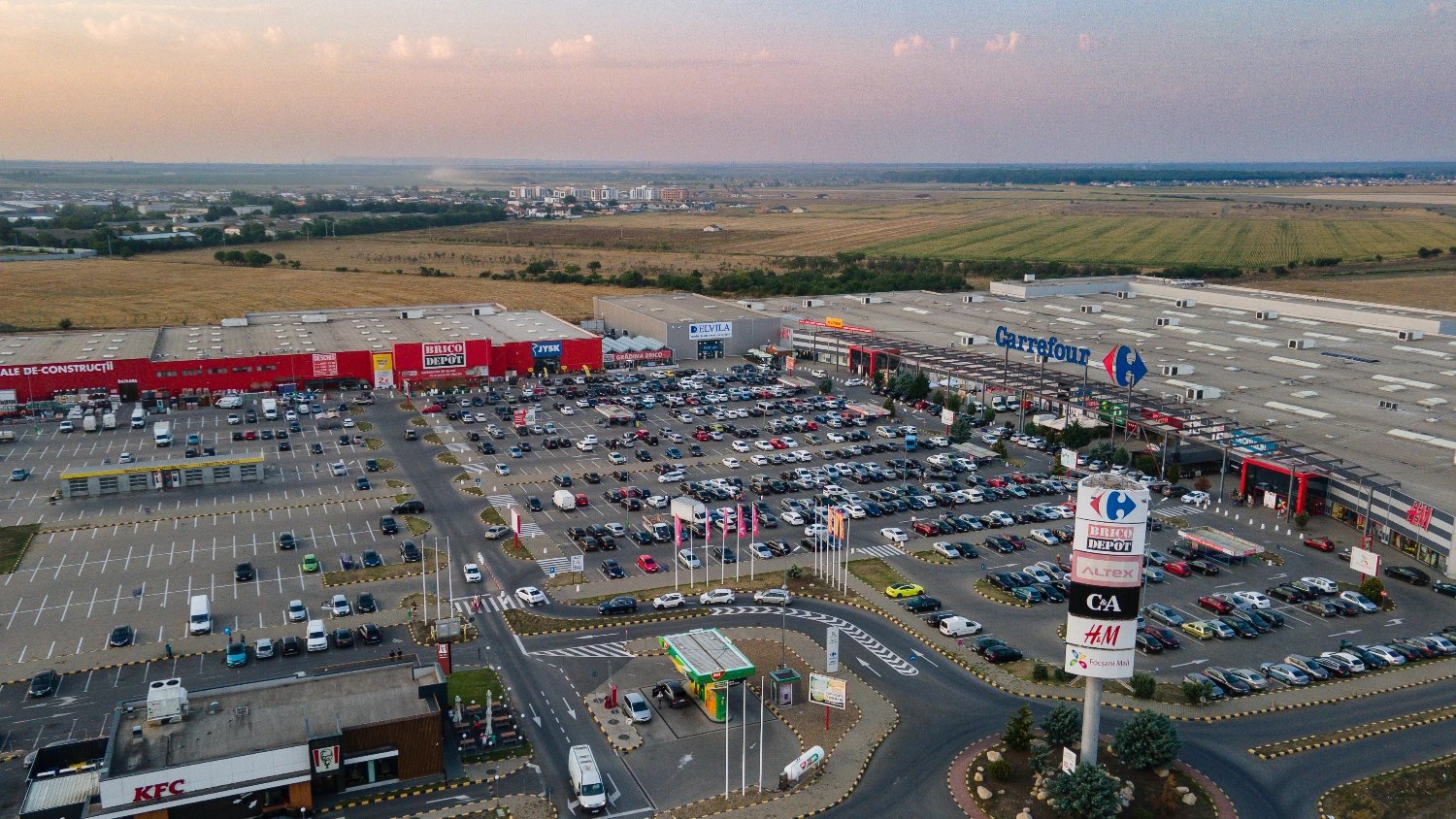
M Core has significantly expanded its retail portfolio with over €150 million in strategic investments over the past six months and has an active pipeline exceeding €200 million in projected developments over the next two years.
Global leaders are increasingly confident in their organizations' AI initiatives, with eight out of ten organizations (78%) anticipating an increase in their overall AI.
Construction labour cost and availability have become the primary concerns for real estate developers in Central Europe, according to a new survey by Deloitte. This shift sees it surpassing project financing, which has been the dominant issue in recent years.
Seven out of ten companies in Romania expect an increase in impact of circular economy regulations from moderate to high and very high in the next five years.
Another important aspect for the organizations' success identified by the study is reimagining the work, workplace, and workforce in line with technology developments (67%).
Bucharest is consolidating its position within the Central and Eastern European (CEE) real estate market, combining rental growth across major asset classes with investment yields that remain well above Western European levels, according to the DNA of Real Estate Europe Q2 2026 report published by Cushman & Wakefield. Across Europe in Q2 2026, prime office rents rose 4.5% year-on-year, retail rents increased 3.0%, and logistics rents grew 2.4%, while investors remained selective as yield movements pointed to a more balanced market following the repricing cycle of recent years.
Energy company Electrica informs investors and the capital market that it has obtained the technical grid connection permits (ATR) for 17 new battery energy storage projects (BESS), with a total capacity of approximately 700 MWh.
The European Retail Banking Radar, Kearney's latest study now in its 18th edition, shows that Europe is entering a period of normalisation following the conditions of 2023–2025. For Romania, the challenge extends beyond the normalisation of interest rates.
Romania's national electricity transmission network operator, Transelectrica, has halted scheduled maintenance shutdowns to ensure the grid operates at maximum capacity during an ongoing extreme heatwave. The preventive measures aim to mitigate operational risks associated with severe weather conditions.
Digi Spain has announced its intention to launch an initial public offering (IPO) on the Spanish stock exchanges, aiming to raise approximately €150 million.