

The network spanning all three countries employs more than 22,000 people, operates 561 stores and generates annual revenue of approximately £4.5 billion, contributing £115 million to Tesco's group adjusted operating profit of £3.2 billion. Tesco has divested a number of its international businesses over the past decade, leaving the Central European operation as one of its last significant presences outside the United Kingdom and Ireland.
The Financial Times reported in July that Tesco is working with Goldman Sachs and Citi to explore a sale, and that the Czech and Slovak businesses may be sold separately from the Hungarian operation. The newspaper noted that price controls introduced by the Hungarian government and special levies on foreign-owned retailers have complicated any potential transaction. Hungary was where Tesco opened its first European store in 1995, and the price control regime is under review following concerns about its impact on Hungarian farmers.
Despite the uncertainty, Tesco's Hungarian performance has improved. On a comparable IFRS basis, revenue rose 6.3% from HUF 697.2 billion to HUF 741.4 billion in the 2025/26 financial year, while the after-tax loss narrowed from HUF 30.4 billion to HUF 10.3 billion. When contacted by Portfolio.hu, Tesco's press office reiterated its earlier position: "We don't comment on market rumours or speculation."
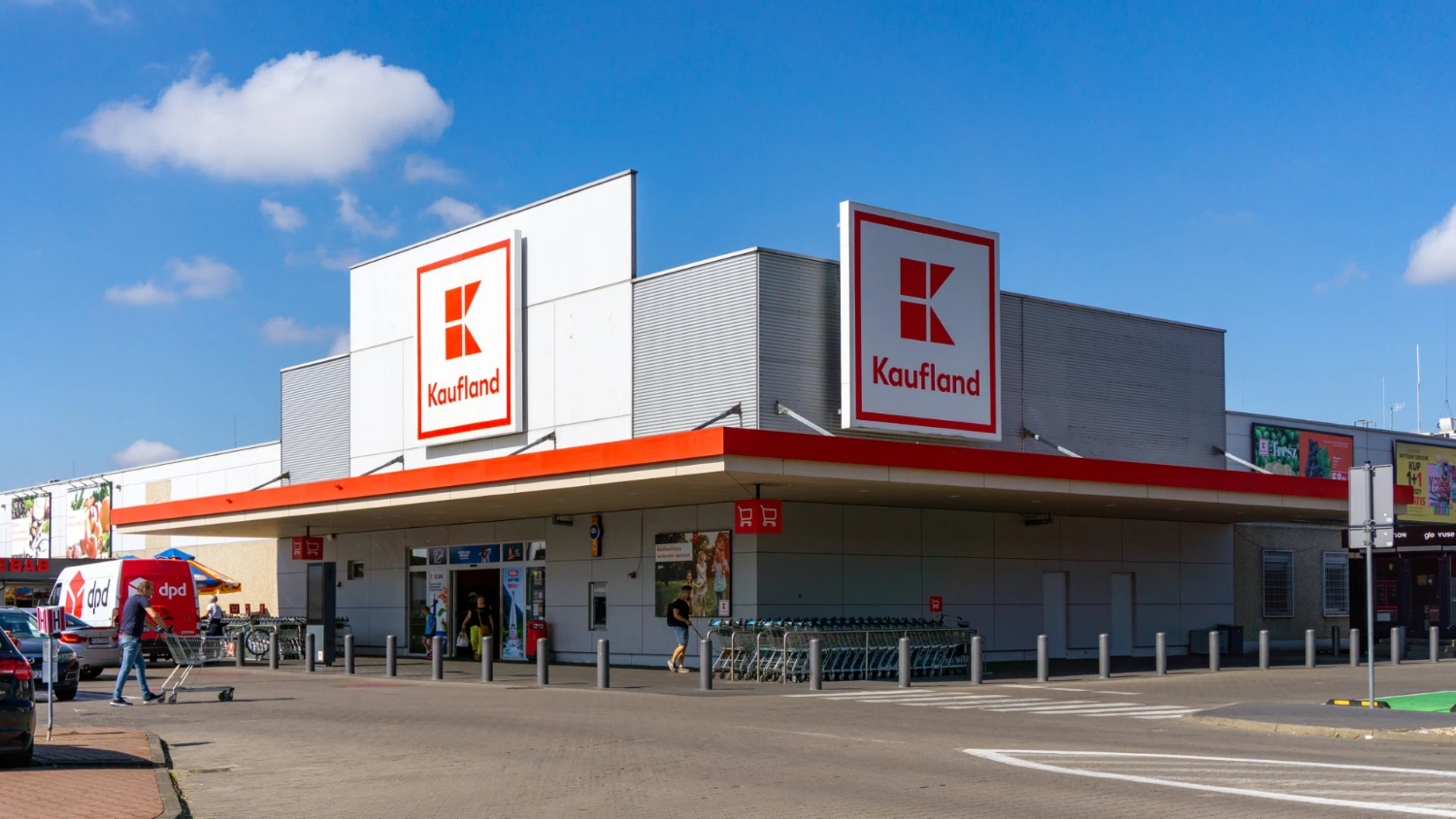
Kaufland, which belongs to the same Schwarz Group as market-leading discounter Lidl, confirmed it operates in Germany, Poland, the Czech Republic, Romania, Slovakia, Bulgaria, Croatia and Moldova, and that it regularly assesses international markets. However, the company told Portfolio.hu: "We are currently not planning to enter the Hungarian retail market." Zita Szlavikovics, Chairwoman of Lidl Hungary's board, said in July that there would be room for Kaufland in Hungary, but that the existing development restrictions would make such an entry very difficult, and that any decision would rest solely with the Schwarz Group's headquarters.
The two Schwarz Group chains operate on different models: Lidl runs a discount format with a narrower product range, while Kaufland operates larger hypermarket-style stores with a broader assortment. Analysts note that a network the size of Tesco's would in principle fit the Kaufland format more closely than the Lidl model.