
Converde calls for clear rules on Romania green roof law

Business Forum
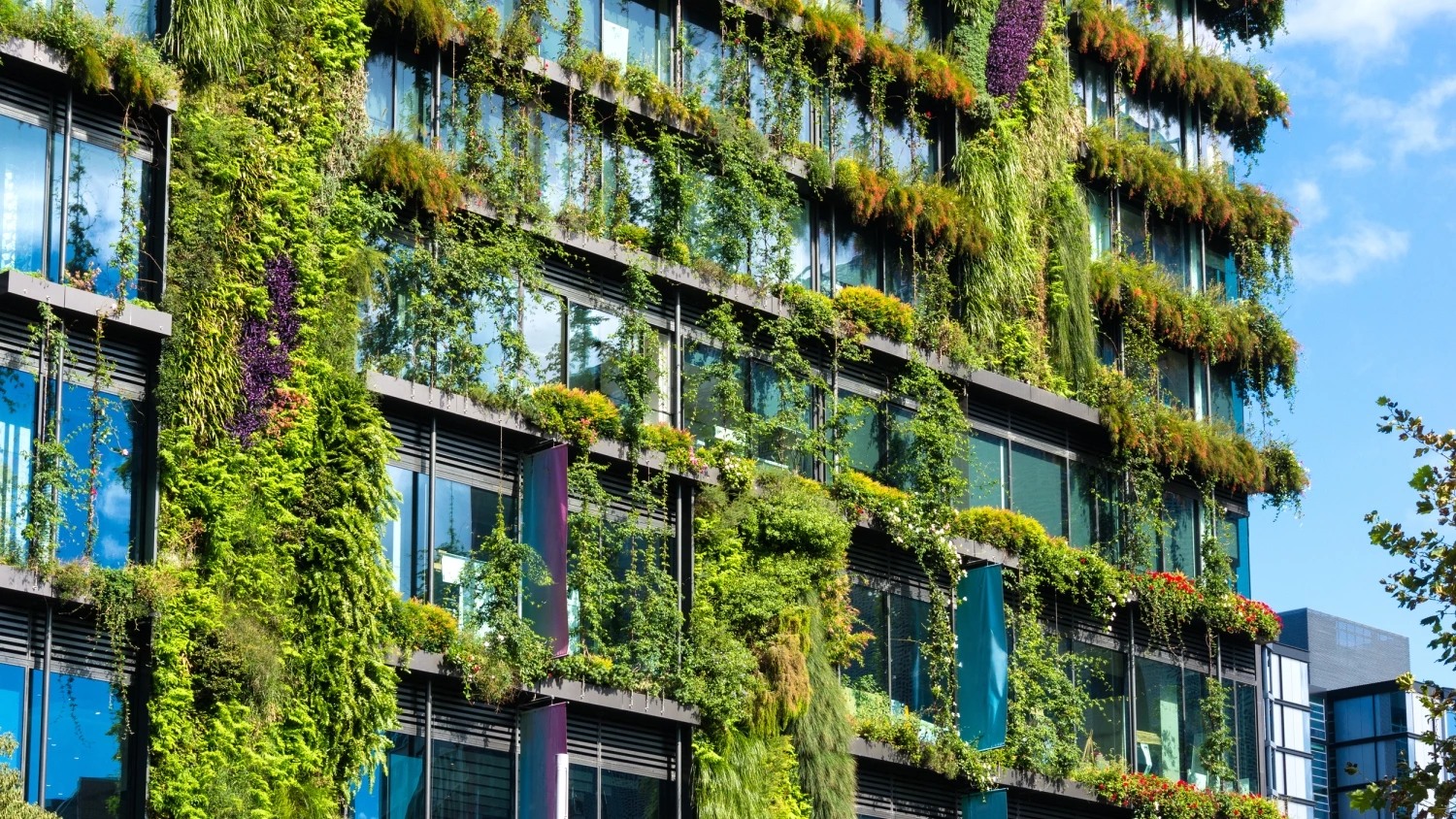
Romania's Urban Planning Code will require, from 1 January 2027, that office, commercial, industrial and storage buildings, including covered car parks, with a built area exceeding 1,000 sqm obtain authorisation only if green roofs adapted to local climatic conditions cover at least half of the roof surface. Industry association Converde welcomes the obligation, arguing that rooftops currently function as heat-accumulating surfaces that discharge rainwater rapidly into drainage systems, and that the new rules could turn them into active infrastructure for urban climate adaptation.

"A green roof acts as a sponge during heavy rainfall and as a natural cooling layer during heatwaves. At city scale, thousands of such surfaces can reduce pressure on drainage systems, limit neighbourhood overheating and return part of the space taken by construction to nature," said Zoltan Kolcsar, president of Converde.

"The benefits can be considerable. We are talking about a solution that can manage roughly half of rainwater, reduce roof surface temperature by 30 to 40 degrees compared with standard waterproofing and extend the service life of the waterproofing layer by up to double. Green roofs are not decorative elements but urban infrastructure," Kolcsar added. When deployed coherently and connected with other green spaces, vegetated rooftops can form biodiversity corridors rather than isolated green islands.

Converde warns, however, that the law's impact will depend on how authorities interpret the exemption clause, which allows the obligation to be waived when requirements cannot be met under technically and economically acceptable conditions. "Without clear and uniform criteria, this wording can lead to different interpretations from one authority to another and can turn the exemption into an easy route for avoiding the obligation. Technical and economic impossibility must be demonstrated through verifiable documents and assessments, not merely declared, and a higher initial cost alone should not be sufficient grounds for granting a derogation," said Kolcsar.

The association argues that technical regulations must define what constitutes a functional and effective green roof, specify the conditions under which an exemption is justified and set minimum standards for design, construction and maintenance. Economic assessments should account for the building's lifespan, long-term savings and public benefits, not only the initial investment. Converde says it is willing to collaborate with relevant ministries, local authorities, professional organisations and academic institutions to develop the regulations needed for consistent application of the law.

"We have a law that can visibly change Romania's cities and allow the industry to grow several times over in the coming years. Now we need to apply it properly. If we set clear standards, monitor the quality of works and prevent exceptions from becoming the norm, in a few years we will be able to see the difference not only from above but also at street level: cooler cities, better prepared for extreme rainfall and closer to nature," Kolcsar concluded.

RECOMMENDED
Decarbonisation is a competitive edge in Romania
Real estate

Decarbonisation is a competitive edge in Romania

Romania's ongoing energy crisis, marked by record-low Danube water levels and declining nuclear output, has prompted sustainability consultancy BuildGreen to argue that decarbonisation should be treated as a cost management and risk reduction tool rather than purely an ESG obligation. According to ANRE data, hydropower and nuclear energy together accounted for nearly half of Romania's electricity generation in March 2026, yet nuclear production fell by 12.3% in the first five months of 2026 compared with the same period in 2025. This pressure arose despite electricity consumption being 3.4% lower than during the corresponding period in 2025.

Green finance becomes the new rule for Romanian real estate
Real estate

Green finance becomes the new rule for Romanian real estate

Sustainability criteria are playing an increasing role when banks finance real estate projects in Romania, while buildings that meet green finance standards can obtain better terms. These are the findings of a study carried out by Colliers on the local market, based on responses from four commercial banks, which together hold more than half of the Romanian banking system's assets, and two multilateral development banks active in the real estate sector. The clearest rule identified for new buildings is the NZEB-10% standard, applied by all institutions analysed. All six require the primary energy demand of a new building to be at least 10% below the national NZEB threshold, and a project that does not meet this standard may still be financed, but the loan will generally not be classified as green finance.

America House Bucharest maintains Breeam Outstanding rating
Real estate

America House Bucharest maintains Breeam Outstanding rating

America House, the office building located at Victoriei Square in Bucharest's CBD, has reconfirmed its Breeam International In-Use Outstanding rating, maintaining its position among the top sustainable office buildings in Romania.

Globalworth renews Access4you certification for entire Romanian portfolio
Real estate

Globalworth renews Access4you certification for entire Romanian portfolio

Globalworth has renewed its Access4you certification for all 16 office buildings in its Romanian portfolio, totaling almost 500,000 sqm. The recertification, conducted with consultancy services from Colliers, marks the second three-year certification cycle for the leading office investor in CEE.

GTCs City Gate secures LEED Gold v5 certification
Real estate

GTC's City Gate secures LEED Gold v5 certification

The South Tower of City Gate in Bucharest, developed and managed by GTC, has been awarded the LEED Gold v5 certificate. This is the latest version of the world's green building standard, outlining steps towards near-zero carbon emissions, prioritizing people, and supporting building resilience. City Gate is the first property in Romania and only the fourth existing building in Europe to achieve this recognition, following projects in Italy, Spain, and Sweden.

RECOMMENDED FROM THE HOME PAGE
Bucharest yields remain well above Western European levels
Real estate

Bucharest yields remain well above Western European levels

Bucharest is consolidating its position within the Central and Eastern European (CEE) real estate market, combining rental growth across major asset classes with investment yields that remain well above Western European levels, according to the DNA of Real Estate Europe Q2 2026 report published by Cushman & Wakefield. Across Europe in Q2 2026, prime office rents rose 4.5% year-on-year, retail rents increased 3.0%, and logistics rents grew 2.4%, while investors remained selective as yield movements pointed to a more balanced market following the repricing cycle of recent years.

Energy

Electrica secures grid permits for 700 MWh of storage

Energy company Electrica informs investors and the capital market that it has obtained the technical grid connection permits (ATR) for 17 new battery energy storage projects (BESS), with a total capacity of approximately 700 MWh.

Energy

Romanian grid operator to support peak power consumption during heatwave

Romania's national electricity transmission network operator, Transelectrica, has halted scheduled maintenance shutdowns to ensure the grid operates at maximum capacity during an ongoing extreme heatwave. The preventive measures aim to mitigate operational risks associated with severe weather conditions.