This overlooked region could shape Europe's next growth story

Business Forum
When international investors discuss Romania, the conversation often begins with Bucharest and increasingly includes cities such as Cluj-Napoca, Timișoara and Brașov. Yet one of the country's most compelling growth stories is unfolding further east.

North-East Romania is undergoing a gradual but significant transformation, driven by infrastructure investment, expanding logistics networks, industrial development and its strategic position at the crossroads of the European Union, Moldova and Ukraine. As geopolitical realities reshape trade routes and supply chains, the region is emerging as one of the most strategically important locations in Central and Eastern Europe.

For years, Romania's eastern counties were viewed primarily as peripheral markets. Today, they are increasingly recognised as gateways connecting EU markets with Eastern Europe, creating opportunities that extend well beyond local demand.

A strategic location becomes a competitive advantage

Geography has always been one of Eastern Romania's greatest assets. What has changed is the way businesses and investors view that geography.

Located on the EU's eastern frontier, the region provides direct access to Moldova while serving as an important logistics and business gateway for future engagement with Ukraine. As companies continue to diversify supply chains and strengthen regional resilience, proximity to multiple markets has become a competitive advantage rather than simply a point on the map.

For manufacturers, logistics operators and investors, this means access to a growing consumer base while positioning themselves at the centre of evolving regional trade flows.

Infrastructure is changing the investment equation

Perhaps the most important catalyst for the region's transformation is infrastructure. Major investments in road and rail connections are steadily improving accessibility between Eastern Romania and the rest of the country, while strengthening links with neighbouring markets. At the same time, investments in border infrastructure, logistics facilities and transport corridors are supporting increased trade and cross-border cooperation.

Improved connectivity reduces one of the traditional barriers to investment, making the region increasingly attractive for industrial developments, logistics parks and manufacturing operations that depend on efficient transport networks.

Infrastructure also creates a multiplier effect. Better connectivity attracts businesses, which in turn creates demand for commercial real estate, residential developments, services and supporting industries.

A growing industrial and logistics hub

Eastern Romania is also benefiting from broader structural shifts across Europe. Manufacturers continue to reassess production locations, while logistics operators seek new hubs capable of serving both domestic and international markets. Nearshoring, supply chain diversification and the search for operational resilience are creating opportunities for regions that combine competitive costs with improving infrastructure and access to skilled labour.

The result is growing interest in industrial and logistics development, supported by increasing demand from occupiers looking beyond Europe's traditional distribution centres.

More than a regional story

The region's development is not taking place in isolation. Closer economic cooperation with Moldova is strengthening cross-border business activity, while preparations for Ukraine's long-term reconstruction are encouraging companies to establish regional operations capable of supporting future projects when conditions allow.

Rather than viewing Romania, Moldova and Ukraine as separate markets, many businesses are beginning to see them as components of a broader economic corridor with complementary strengths. This creates opportunities not only for logistics and infrastructure providers but also for developers, financial institutions, professional services firms and technology companies.

A window of opportunity

Unlike mature investment destinations where opportunities are increasingly limited, Eastern Romania remains a market where significant long-term growth potential exists.

Urban development continues to accelerate, industrial demand is expanding, infrastructure investment is reshaping connectivity, and international interest is steadily increasing. For investors willing to look beyond traditional locations, the region offers the chance to participate in a market that is still defining its next phase of development.

Understanding these changes requires more than simply analysing market statistics. It requires dialogue between investors, developers, public authorities, occupiers and infrastructure experts who are actively shaping the region's future.

These themes will be explored at Property Forum EastGate 2026, which will bring together senior decision-makers from across Romania, Moldova and Ukraine to discuss the investment opportunities, infrastructure projects and partnerships shaping Europe's next growth corridor.

RECOMMENDED
The Eastern Growth Corridor can turn strategic importance into investment
Real estate

The Eastern Growth Corridor can turn strategic importance into investment

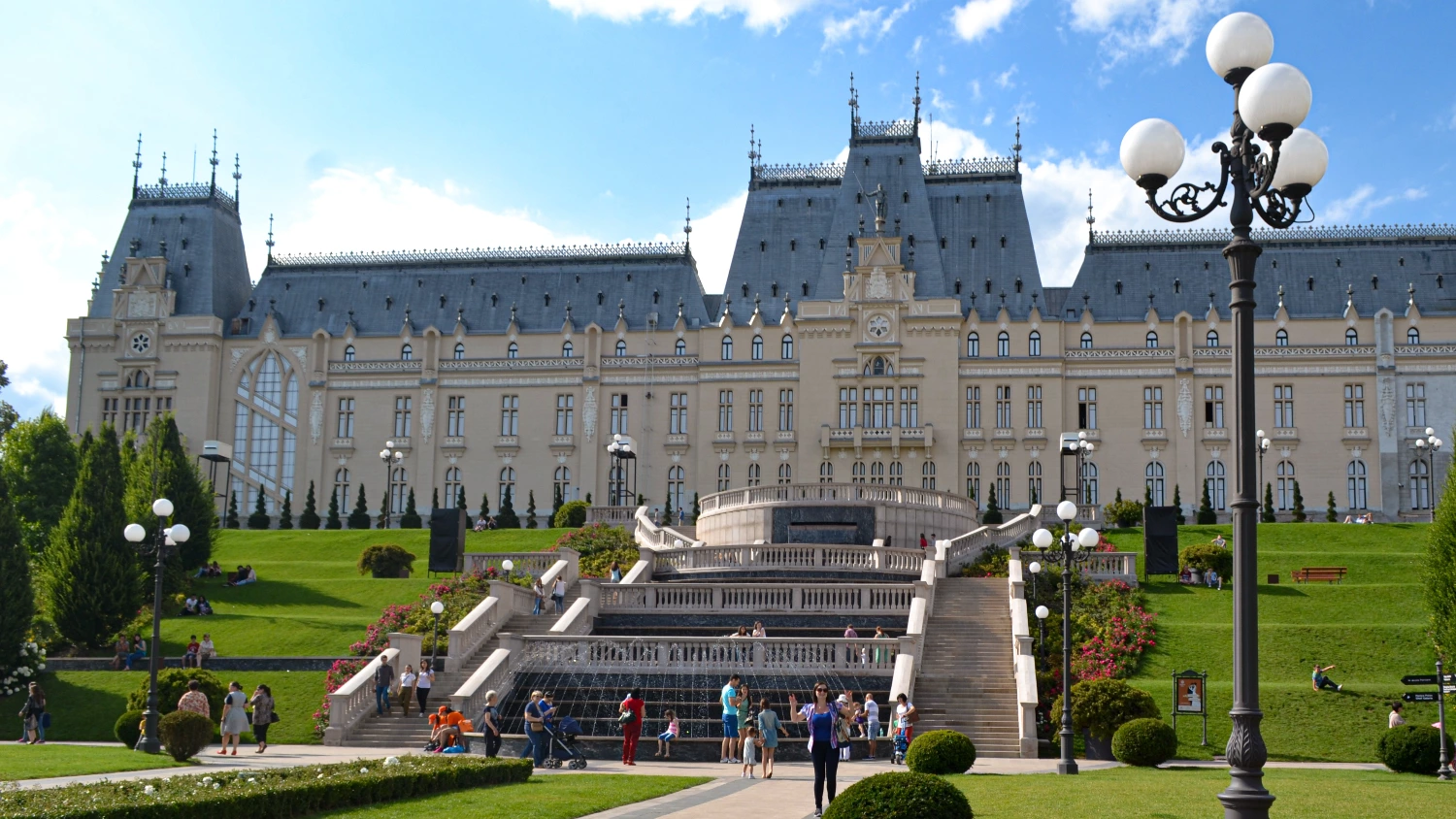
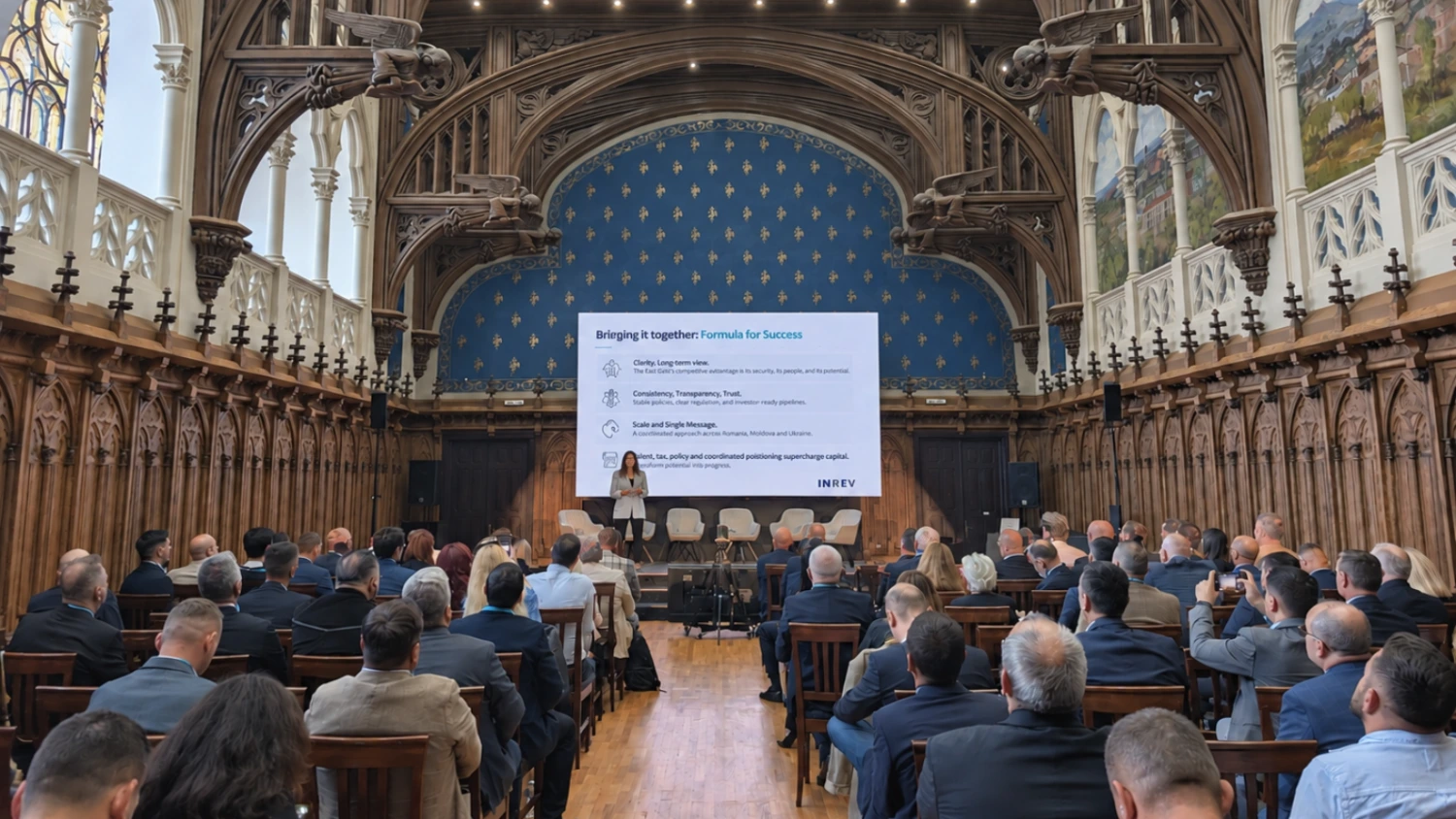
Property Forum's first EastGate Investment Showcase, held on 15 September, brought together investors, business leaders, financial institutions, public authorities and regional decision-makers at the Palace of Culture in Iași to explore how Northeast Romania and the wider Romania-Moldova-Ukraine corridor can translate its strategic position into investable opportunities. The event created a new meeting point between international capital and regional stakeholders, with discussions ranging from infrastructure and energy to real estate, logistics and Ukraine's reconstruction. EastGate's objective extends beyond the event itself: the initiative will continue with the development of the EastGate Investment Pipeline 2027, aimed at identifying and preparing concrete opportunities for investors.

What makes an investment destination competitive today?
Real estate

What makes an investment destination competitive today?

Every region with international ambitions eventually reaches the same point. Competitive labour costs, strategic location and investment incentives may succeed in attracting attention, but sustaining long-term growth requires something more. Investors need access to decision-makers, businesses need reliable public-sector partners and local authorities need a platform where regional opportunities can be presented to an international audience.

Beyond manufacturing: Whats putting North East Romania on investors radar
Real estate

Beyond manufacturing: What's putting North East Romania on investors' radar

North East Romania has long been recognised as one of the country's manufacturing centres, but reducing the region's investment story to factories and production lines no longer tells the full picture. Over the past decade, a broader economic ecosystem has begun to emerge, one that combines advanced manufacturing with technology, research, healthcare, logistics and a rapidly evolving business services sector. It is this diversification that is increasingly attracting the attention of investors and will be one of the key themes explored at the inaugural edition of EastGate this September.

Why North East Romania is Europes next investment frontier
Real estate

Why North East Romania is Europe's next investment frontier

For decades, Romania's investment story has largely been associated with Bucharest, Cluj-Napoca and the country's western industrial hubs. Yet as investors search for new growth opportunities across Central and Eastern Europe, attention is increasingly shifting east. This emerging trend will be at the heart of discussions during EastGate 2026, where investors, developers, business leaders and public officials will gather in Iași to examine why North East Romania is becoming one of Europe's most promising investment destinations.

Europes next growth corridor is emerging in the East
Real estate

Europe's next growth corridor is emerging in the East

For decades, investment activity in Central and Eastern Europe has been concentrated around a handful of established markets and capital cities. Yet some of the most significant economic shifts taking place today are happening further east, along a corridor connecting Romania, Moldova and Ukraine.

Regional retail centres lead Romanias property investment in 2025
Real estate

Regional retail centres lead Romania's property investment in 2025

Shopping centres outside Bucharest were the most attractive real estate asset class for investors in 2025, accounting for almost 40% of the total transaction volume, according a new report by Cushman & Wakefield Echinox. Bucharest office buildings came second, with a 30% share in the total investment volume.

RECOMMENDED FROM THE HOME PAGE
Bucharest yields remain well above Western European levels
Real estate

Bucharest yields remain well above Western European levels

Bucharest is consolidating its position within the Central and Eastern European (CEE) real estate market, combining rental growth across major asset classes with investment yields that remain well above Western European levels, according to the DNA of Real Estate Europe Q2 2026 report published by Cushman & Wakefield. Across Europe in Q2 2026, prime office rents rose 4.5% year-on-year, retail rents increased 3.0%, and logistics rents grew 2.4%, while investors remained selective as yield movements pointed to a more balanced market following the repricing cycle of recent years.

Energy

Electrica secures grid permits for 700 MWh of storage

Energy company Electrica informs investors and the capital market that it has obtained the technical grid connection permits (ATR) for 17 new battery energy storage projects (BESS), with a total capacity of approximately 700 MWh.

Energy

Romanian grid operator to support peak power consumption during heatwave

Romania's national electricity transmission network operator, Transelectrica, has halted scheduled maintenance shutdowns to ensure the grid operates at maximum capacity during an ongoing extreme heatwave. The preventive measures aim to mitigate operational risks associated with severe weather conditions.