


North East Romania appears to be reaching that stage. As investment activity accelerates and the region seeks to strengthen its position within Central and Eastern Europe, the launch of EastGate this September reflects a broader ambition: not simply to attract investment, but to create a platform where the public and private sectors can shape the region's future together.
This collaborative approach has become increasingly important across Europe. Major investment decisions rarely depend on a single factor such as taxation or labour costs. Instead, investors evaluate an ecosystem that includes infrastructure, education, institutional support, access to financing and the ability of different stakeholders to work towards common objectives. Regions that successfully bring these elements together are often those that outperform over the long term.
North East Romania has spent the past several years strengthening many of these foundations. The region's economic profile has become increasingly diversified, while significant European funding is helping modernise infrastructure, support innovation and improve the business environment. Through the 2021-2027 Regional Programme, North East Romania has access to €1.75 billion dedicated to increasing competitiveness, resilience and sustainable development, creating the conditions for future private investment.
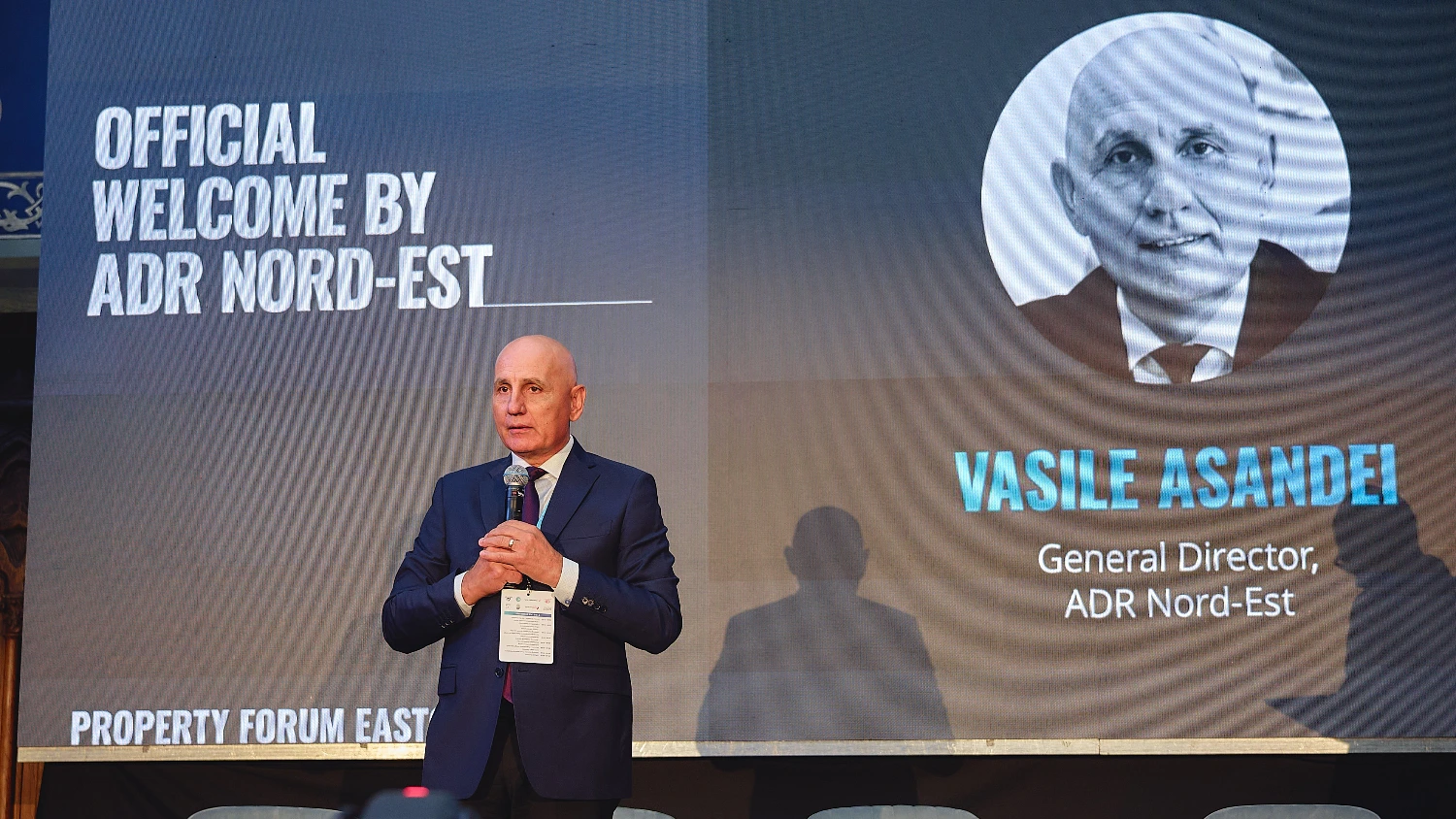
Supporting this transformation is the North-East Regional Development Agency, whose role extends well beyond attracting foreign companies. The agency acts as a bridge between investors, local authorities, universities and businesses, assisting companies with site selection, identifying suppliers, facilitating access to European funding and supporting project implementation. It also works to connect investors with research institutions and innovation centres, recognising that long-term competitiveness increasingly depends on collaboration rather than isolated investment projects.
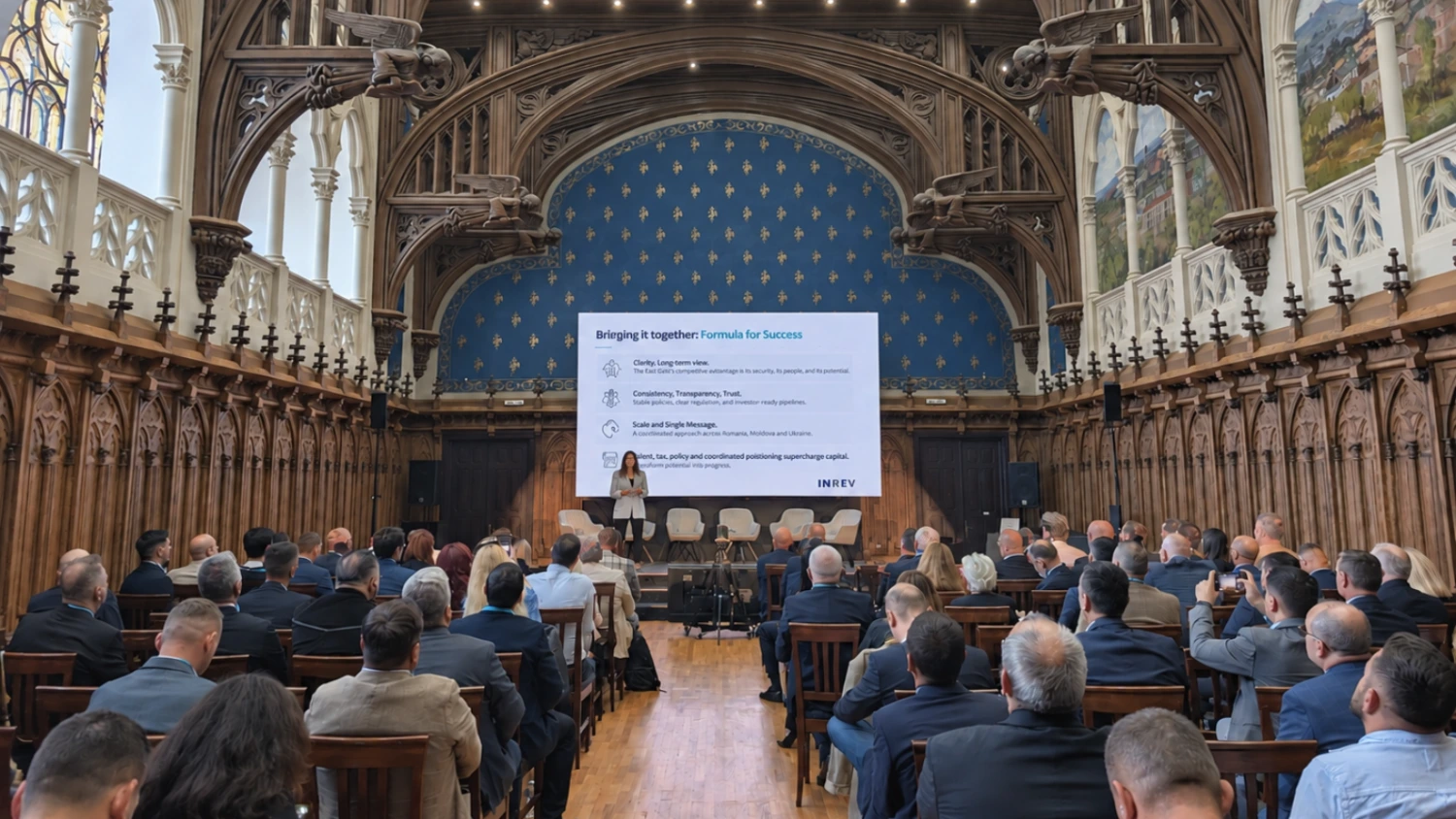
That same philosophy lies behind the creation of EastGate. Rather than serving solely as a conference, the inaugural event aims to bring together many of the organisations already contributing to the region's development. Investors will have the opportunity to engage directly with public authorities, infrastructure experts, developers, entrepreneurs and business leaders, while regional institutions can present projects and partnerships to an international audience.
This is particularly relevant at a time when North East Romania is becoming more closely integrated into wider European investment flows. Its position on the EU's eastern border gives it a growing role in trade with the Republic of Moldova while also creating opportunities linked to Ukraine's future reconstruction and increasing regional cooperation. As companies continue reviewing their supply chains and considering long-term expansion strategies, the region is becoming part of a much broader conversation about Europe's economic geography.
The launch of EastGate recognises that this conversation extends beyond individual investment projects. Questions surrounding transport infrastructure, cross-border connectivity, energy, education, innovation and workforce development are closely interconnected, and decisions in one area increasingly influence opportunities in another. Bringing these discussions together within a single forum reflects how investment decisions are made today.
Education provides a good example. North East Romania's seven public universities and four private institutions produce graduates across engineering, IT, medicine, agriculture and other disciplines that support the region's economic priorities. These institutions are not only supplying skilled professionals but are increasingly becoming partners in research, innovation and technology transfer. For investors evaluating long-term expansion, this relationship between academia and industry has become a significant competitive advantage.
The same applies to financing. Alongside regional development funding, Romania offers an extensive portfolio of national investment incentives supporting manufacturing, industrial development, innovation and business expansion. While financial support remains an important consideration, investors increasingly view these programmes as one component of a wider ecosystem that includes institutional capacity, infrastructure and talent availability.
These interconnected themes are expected to define many of the discussions during EastGate's inaugural edition. Rather than focusing on one asset class or one industry, the programme reflects the reality that successful regional development depends on multiple sectors progressing together. Industrial investment creates demand for logistics and commercial real estate. Universities support technology companies and advanced manufacturing. Infrastructure improvements strengthen competitiveness across the entire economy. Public institutions help create the conditions for private investment to flourish.
For North East Romania, this integrated approach may prove to be one of its greatest strengths. The region is no longer presenting itself solely as a destination offering competitive costs or available land. Instead, it is making the case that investors can become part of a broader growth story supported by strong institutions, a skilled workforce, European funding and increasing international connectivity.
The launch of EastGate comes at an appropriate moment in that story. As North East Romania continues to raise its international profile, the region is creating not only new investment opportunities but also a new platform where those opportunities can be explored, challenged and developed. Whether that leads to new partnerships, new projects or simply a better understanding of one of Romania's fastest-evolving regions, the inaugural forum signals an important step in positioning North East Romania more firmly on the European investment map.