Skanska report urges decades-long thinking in real estate

Business Forum
Skanska has published its 2026 "Shaping Sustainable Places" report, which examines how urban developments can retain their appeal, adaptability and economic viability long after construction is complete. The report argues that performance at the point of handover is no longer sufficient on its own; a project's ability to adapt to changing needs throughout its full lifecycle is equally important.

European developments featured in the report illustrate the role flexibility can play in preserving long-term value. Buildings must be capable of accommodating new technologies, supporting different ways of working and serving shifting tenant requirements. The report concludes that decisions taken at the earliest stages of design often determine whether a building remains competitive decades later.

"The real challenge is not to design for today's market conditions, but to anticipate what tenants, investors and cities may need in ten or twenty years. Buildings are completed within a few years, but their usability and appeal span multiple economic cycles," said Aurelia Luca, executive vice president of Skanska's commercial property development business in Hungary and Romania.

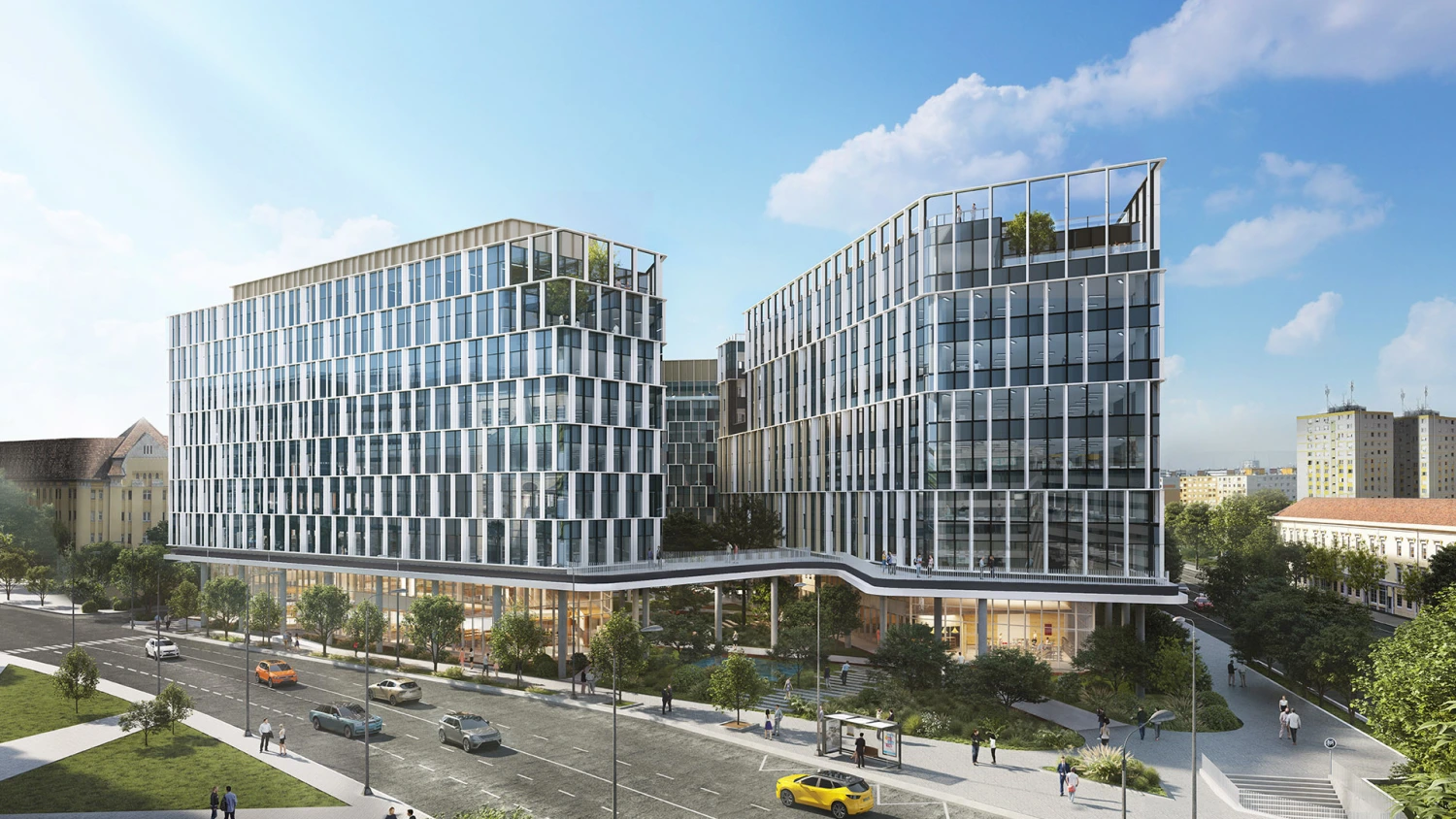
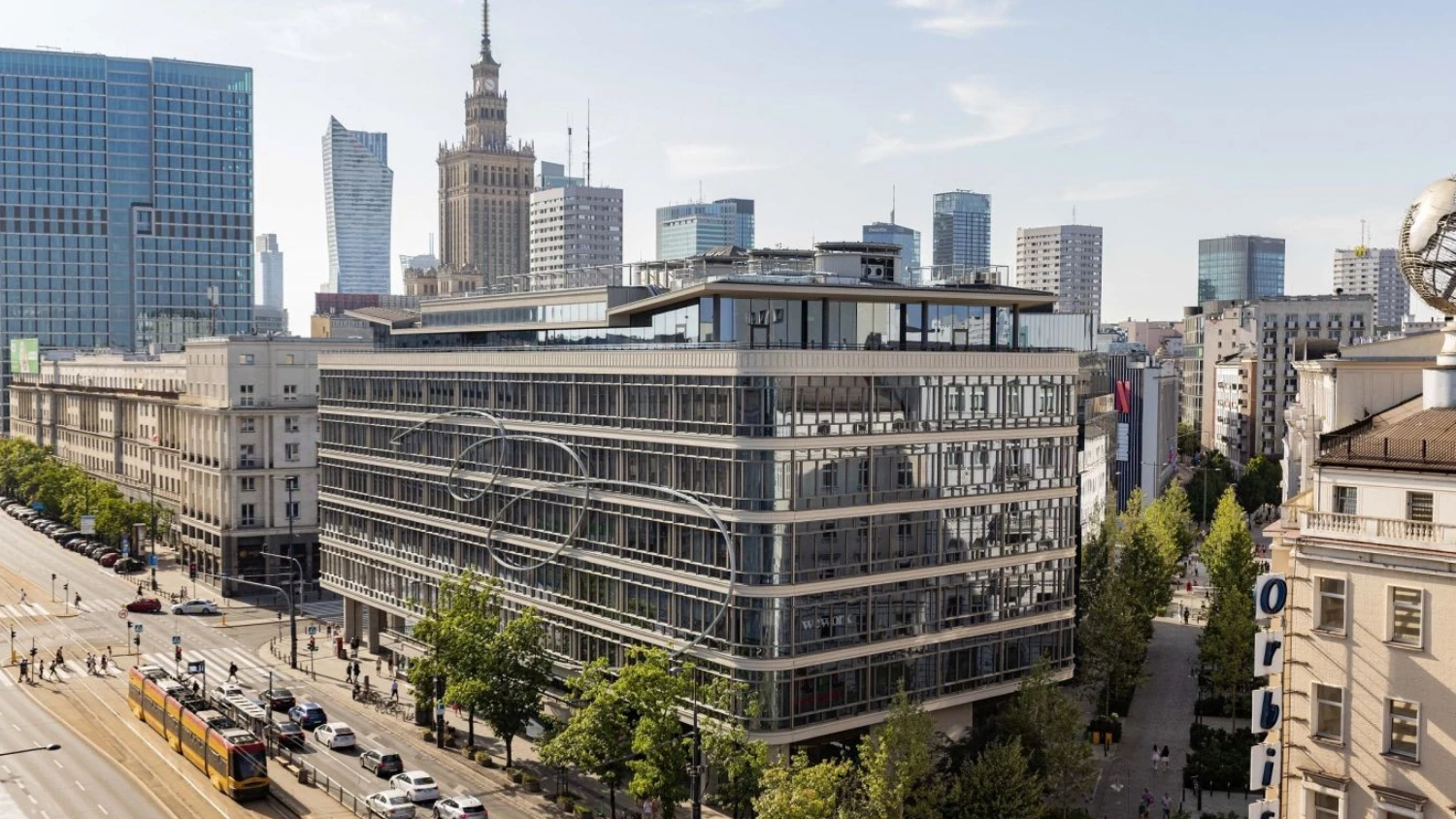
The report draws on projects in Stockholm, Copenhagen, Prague and Poznań to show how a long-term approach can help developments retain their value. Beyond the performance of individual buildings, these projects take into account adaptability, urban connectivity, public spaces and everyday user experience. In Warsaw, the Váci út office corridor has evolved into one of the city's principal business districts over the past two decades, shaped by private investment, infrastructure upgrades and changing occupier demands. Skanska's H2Offices development follows the same long-term logic, with the full vision set to be realised upon completion of its final phase.

According to the report, this kind of thinking is becoming increasingly important across the real estate sector. Leasing activity, certifications and transaction volumes remain useful indicators, but they capture only a single moment in time. The true measure of success emerges later, in whether a development can attract people, businesses and investment across multiple market cycles. Skanska Hungary has operated in the country for more than 39 years and has developed over 250,000 sqm of commercial space, with all Hungarian projects certified under LEED, WELL Core and Shell, and Access4you standards.
RECOMMENDED
CEE emerges as Europes new defence industry powerhouse, says KPMG
Industry

CEE emerges as Europe's new defence industry powerhouse, says KPMG

CEE is transforming from Europe's periphery into a defence industry powerhouse, according to a new KPMG study. The region's combination of cost efficiency, industrial capacity, and strategic location is attracting investment as European defence spending increases.

CEE property investment climbs 24% above 5-year average in 2025
Real estate

CEE property investment climbs 24% above 5-year average in 2025

Commercial property investment in CEE rebounded strongly in 2025, with a combined volume of €11.3 billion across Czech Republic, Poland, Hungary, Romania and Slovakia. This represents a 34% year-on-year increase and stands 24% above the five-year average, according to data by Knight Frank.

RECOMMENDED FROM THE HOME PAGE
Bucharest yields remain well above Western European levels
Real estate

Bucharest yields remain well above Western European levels

Bucharest is consolidating its position within the Central and Eastern European (CEE) real estate market, combining rental growth across major asset classes with investment yields that remain well above Western European levels, according to the DNA of Real Estate Europe Q2 2026 report published by Cushman & Wakefield. Across Europe in Q2 2026, prime office rents rose 4.5% year-on-year, retail rents increased 3.0%, and logistics rents grew 2.4%, while investors remained selective as yield movements pointed to a more balanced market following the repricing cycle of recent years.

Energy

Electrica secures grid permits for 700 MWh of storage

Energy company Electrica informs investors and the capital market that it has obtained the technical grid connection permits (ATR) for 17 new battery energy storage projects (BESS), with a total capacity of approximately 700 MWh.

Energy

Romanian grid operator to support peak power consumption during heatwave

Romania's national electricity transmission network operator, Transelectrica, has halted scheduled maintenance shutdowns to ensure the grid operates at maximum capacity during an ongoing extreme heatwave. The preventive measures aim to mitigate operational risks associated with severe weather conditions.