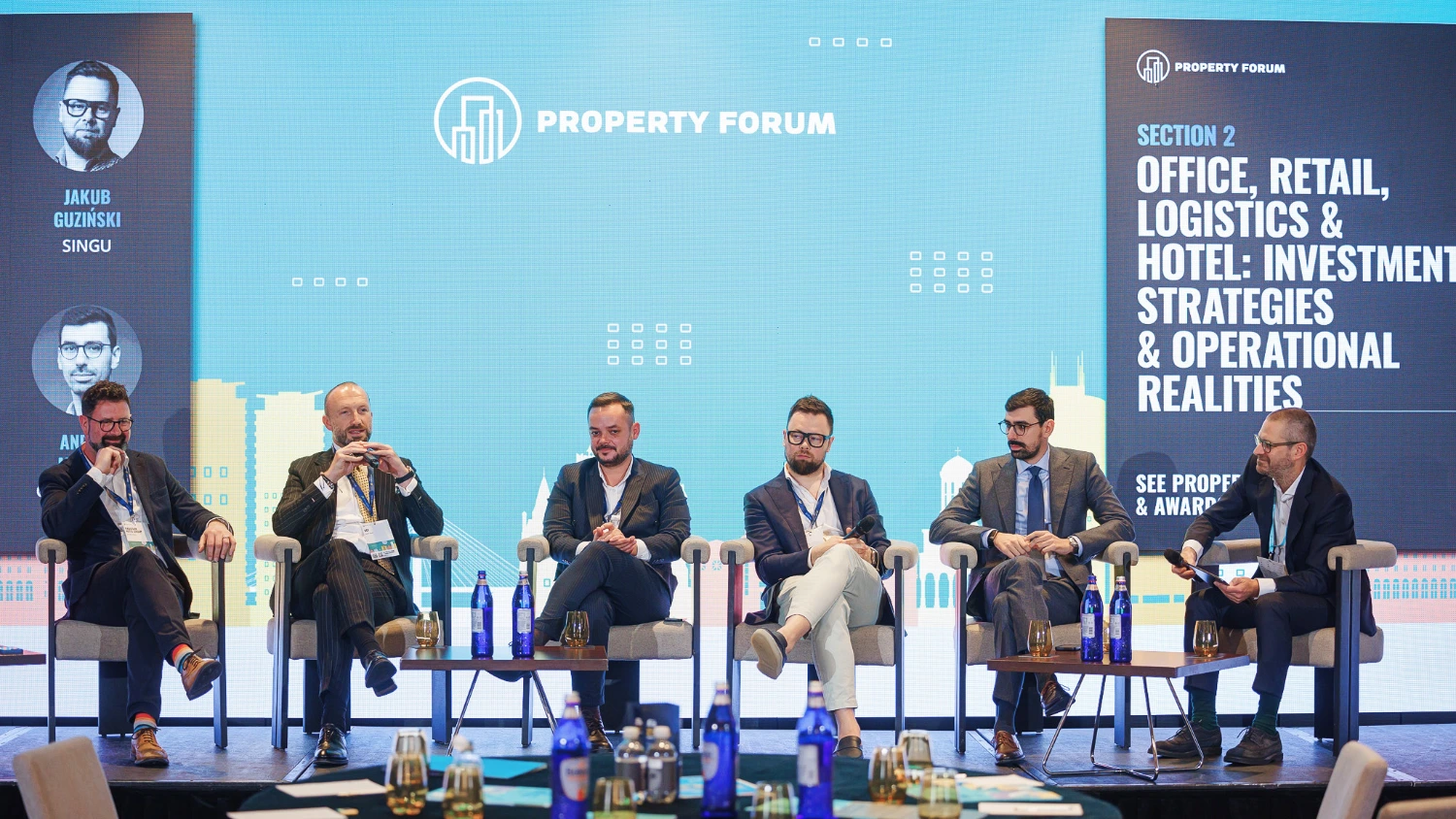


David Jenkins, Vice President Business Development Eastern Europe at Radisson Hotel Group, said the company is increasingly prioritising hotel conversions and projects that are already under construction or have obtained the necessary permits. Rather than pursuing large greenfield developments that may take years to materialise, Radisson is focusing on properties that can enter the market relatively quickly, ideally within 18 months. Recent activity in Romania includes smaller hotels in Timișoara and Sinaia, alongside the planned conversion of an existing spa hotel in Băile Felix. Jenkins also highlighted the importance of operational performance in hospitality, where revenues depend on daily guest demand and continuous service delivery. Different ownership structures, including leases, management agreements and franchises, determine how operational responsibilities and returns are shared between hotel groups and property owners. While automation can improve back-office functions, he stressed that hotel development remains fundamentally a relationship-driven business, requiring a detailed understanding of local markets and suitable partners. Looking ahead, he identified the shortage of skilled hospitality employees as a major challenge.
Josef Malíř, Executive Director at SCF, outlined the company's preference for well-located, first-generation shopping centres, modern retail parks and grocery-anchored properties. Older shopping centres can offer attractive repositioning opportunities because their original developers often secured particularly strong locations, which remain valuable even when the buildings themselves require refurbishment. Malíř sees opportunities in Romania, where comparable retail assets can be priced differently from those in more established Central European markets. However, he emphasised that successful investment starts with the acquisition price: even excellent asset management cannot compensate for buying or developing a property at an unsustainable cost. He also questioned the extent to which investment decisions can be automated, arguing that understanding a market requires direct experience, relationships and local knowledge rather than relying exclusively on reports and data. Although retail assets offer relatively measurable risks through tenant performance and rental income, growing global uncertainty is making him more cautious about new investments.
Andrei Marian, Business Development Director at CTP Romania, described a shift in the country's industrial market towards higher-value activities and more specialised buildings. While logistics accounts for approximately 70% of CTP's existing Romanian portfolio, production and other activities are becoming increasingly important. The company is therefore placing greater emphasis on customised facilities that require higher investment but can attract longer-term tenants and generate stronger relationships. As a long-term owner, CTP also sees operational management as central to its business model, with approximately two-thirds of its Romanian business coming from existing customers. Marian argued that technology and automation can improve efficiency, but only when supported by employees who take responsibility for maintaining properties and responding to tenant needs. With competition increasing and margins under pressure, he expects developers to become more selective about projects and partnerships, prioritising resilience over expansion for its own sake. Finding the right balance between tenants' growing demand for flexibility and landlords' commercial requirements will be a key challenge.
Bogdan Dragoi, Operations & Facilities Strategy Lead at BMF GRUP, argued that improving building performance begins with reliable operational information rather than sophisticated technology. Property owners need accurate asset registers, maintenance records and performance data before they can make effective use of predictive maintenance or artificial intelligence. By monitoring building systems and identifying potential problems before equipment fails, operators can reduce disruption and protect long-term asset value. However, Dragoi warned against assuming that technology can replace experienced facilities management teams. Even when an automated system identifies a problem, a qualified technician is still required to resolve it. He also emphasised the importance of incorporating operational data into investment due diligence, as maintenance history, equipment performance and future operating costs can significantly influence a property's long-term competitiveness and financial performance.
Jakub Guziński, Business Development Executive at SINGU, similarly identified data quality and standardisation as essential foundations for more efficient property management. Many building owners already possess substantial amounts of operational information, but it is often fragmented across different systems or recorded inconsistently. Bringing this information together and applying common standards across portfolios allows managers to compare performance, identify problems and introduce automation more effectively. Guziński highlighted examples where the proportion of maintenance activities managed preventively increased substantially after better data collection and monitoring were introduced. He cautioned that AI cannot deliver reliable results when the underlying information is incomplete or inaccurate. Beyond technology, he sees organisational resistance to change as an important obstacle, making employee training and engagement essential. He also highlighted sustainability reporting and building certification as factors that can strengthen asset resilience, support financing and improve long-term investment value.
The discussion, chaired by Csanád Csürös, CEO of Property Forum, highlighted the increasingly close relationship between investment decisions and operational performance. Although the opportunities and risks differ across asset classes, the panellists agreed that long-term value depends on more than selecting the right property or development site. Effective management, reliable data, experienced teams and realistic financial assumptions are becoming increasingly important as market conditions remain unpredictable. Technology can help owners operate more efficiently, but successful investment strategies will continue to require sound judgement, local expertise and a disciplined approach to risk.