EU backs Holcims Romania carbon capture project

EU backs Holcim's Romania carbon capture project

Business Forum
The European Union's Innovation Fund has selected Holcim Romania's Carbon Hub CPT01 project for funding, marking a significant step in the decarbonisation of the construction sector across Eastern Europe.

The initiative represents the first industrial-scale, onshore Carbon Capture and Storage (CCS) project of its kind in the region.

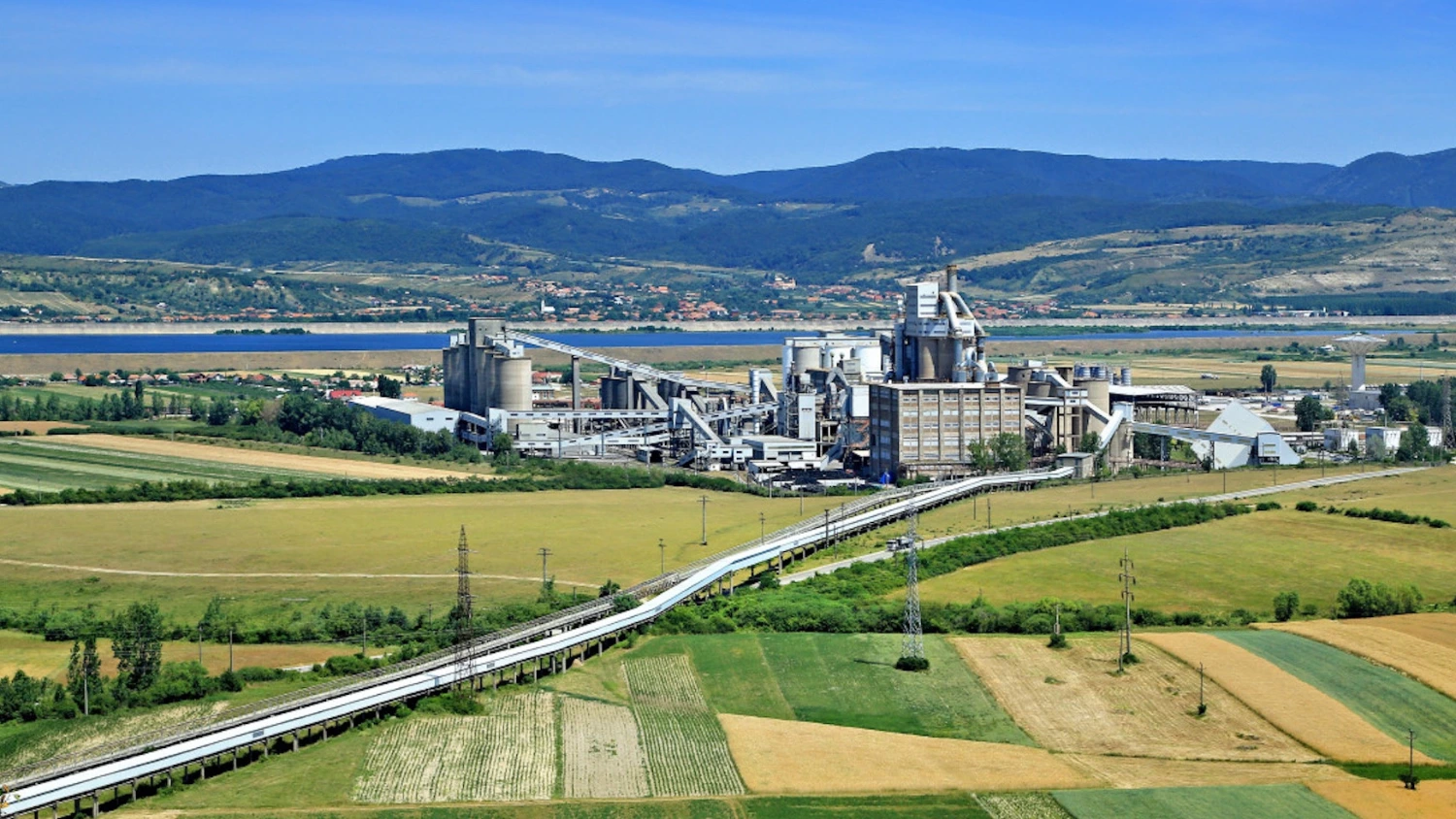
The project is designed to capture carbon emissions from cement and lime production at the company's Câmpulung facility and store it permanently underground in Romania. As a fully integrated onshore CCS initiative, it is unique in the region for simultaneously capturing from both cement and lime production, positioning Romania at the forefront of climate innovation.

Bogdan Dobre, CEO, Holcim Romania, said: “This funding represents a vote of confidence in cutting-edge technologies and makes our carbon capture project more viable and scalable. At the same time, it is essential that we continue to have the support of Romanian and European authorities to turn this project into reality. We thank the European Union, Carmeuse, and all our partners for the trust and collaboration that makes this historic step possible.”

Operating as a public-private partnership, the project includes Carmeuse as a key industrial partner, whose expertise in lime and limestone solutions is crucial to building a robust CCS value chain. The approval will accelerate Holcim's NextGen Growth strategy, which features the EU's most diverse portfolio of mature carbon capture projects.

The consortium will now advance the design and permitting phases, with the aim of starting construction before the end of the decade and achieving the first capture and storage of carbon by 2032. The project aligns with Holcim Group's global ambition to supply net-zero cement by 2032.
RECOMMENDED
Decarbonisation is a competitive edge in Romania
Real estate

Decarbonisation is a competitive edge in Romania

Romania's ongoing energy crisis, marked by record-low Danube water levels and declining nuclear output, has prompted sustainability consultancy BuildGreen to argue that decarbonisation should be treated as a cost management and risk reduction tool rather than purely an ESG obligation. According to ANRE data, hydropower and nuclear energy together accounted for nearly half of Romania's electricity generation in March 2026, yet nuclear production fell by 12.3% in the first five months of 2026 compared with the same period in 2025. This pressure arose despite electricity consumption being 3.4% lower than during the corresponding period in 2025.

Market beat: How large office tenants gain leverage in Bucharest
Real estate

Market beat: How large office tenants gain leverage in Bucharest

Lavinia Ioniță Rasmussen, Real Estate Partner at Nestor Nestor Diculescu Kingston Petersen (NNDKP), talked to Property Forum about the firm's growing portfolio in industrial and renewable energy, but also about the new EU rules that will boost investments in green buildings.

Investors in Romania expect growth in logistics during 2025
Real estate

Investors in Romania expect growth in logistics during 2025

Investors view the logistics sector with optimism and, to a lesser extent, retail over the next 12 months, according to a Cushman & Wakefield Echinox study conducted among the most important investors and developers in Romania.

RECOMMENDED FROM THE HOME PAGE
Electrica secures grid permits for 700 MWh of storage
Energy

Electrica secures grid permits for 700 MWh of storage

Energy company Electrica informs investors and the capital market that it has obtained the technical grid connection permits (ATR) for 17 new battery energy storage projects (BESS), with a total capacity of approximately 700 MWh.

Energy

Romanian grid operator to support peak power consumption during heatwave

Romania's national electricity transmission network operator, Transelectrica, has halted scheduled maintenance shutdowns to ensure the grid operates at maximum capacity during an ongoing extreme heatwave. The preventive measures aim to mitigate operational risks associated with severe weather conditions.