

This interview was first published in Property Forum's annual listing of "The 50 most influential people in Romania's real estate market”.
What are your expectations for the investment market this year?
The Romanian real estate investment market started 2026 on a solid footing, with approximately €152 million transacted in Q1. The office sector was the main driver of activity, accounting for 89% of total volume, which confirms renewed investor confidence in quality office assets. Domestic investors remain highly active and represented around 36% of total investment volume in the first months of 2026, broadly in line with their strong contribution in 2025, when they deployed approximately €193 million, or 34% of annual market volume. At the same time, one of the most significant transactions of the year so far was completed by a new foreign investor entering Romania through the acquisition of the @Expo office complex in Bucharest for approximately €52 million. This is an important signal that Romania continues to attract fresh international capital. Looking ahead, we expect both domestic and foreign investors to remain active.
What are the primary industry sectors driving office leasing take-up in Bucharest in 2026?
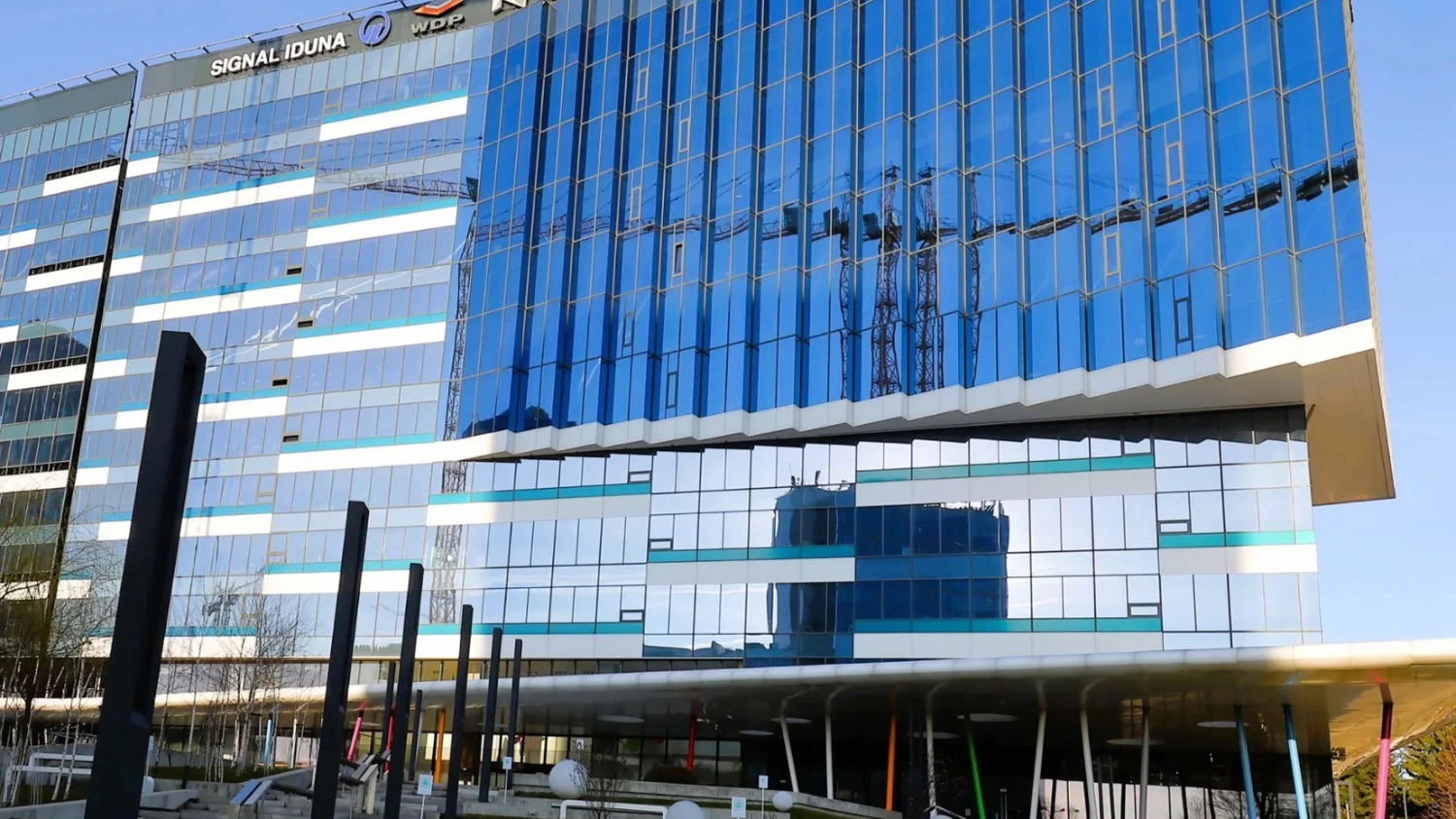
The IT&C sector continues to be the leading source of office demand in Bucharest, reflecting Romania's strong talent pool and its position as a regional technology hub, However, the market is becoming more diversified and healthier in structure. We are seeing increasing demand from sectors such as Professional Services, Energy & Utilities, Healthcare & Pharma, Financial Services, and Consumer & Shared Services. This broader demand base is positive for market resilience, as leasing activity is no longer overly dependent on a single sector. We also see a clear focus from occupiers on quality rather than quantity: ESG-compliant buildings, efficient floorplates, access to public transport, and employee experience have become central decision-making criteria.
How is the Fortim Capital Markets division adapting to meet the growing interest from well-capitalised local investors?
We maintain an active and continuous screening process of Romanian investors and regularly engage with entrepreneurs, family offices, and private capital groups seeking exposure to real estate. The key today is not only identifying buyers but matching them with the right opportunities and investment structures. A major competitive advantage for Fortim is the synergy we have through the BNP Paribas Real Estate Alliance, which allows us to combine strong local execution with international reach. Internally, our Capital Markets team works closely with our leasing, valuation, research, and advisory divisions, allowing us to provide a full 360-degree perspective on each asset.
With only one new office building set for delivery in the 2025-2026 period, how is the market for fitted-out spaces in existing projects evolving?
The limited pipeline of new office deliveries is increasing pressure on existing quality stock and changing occupier expectations. We are seeing a growing number of tenants actively searching for spaces where landlords are prepared to offer incentive packages close to the cost of delivering a fully fitted office. For many occupiers, the decision is no longer based only on headline rent, but on the total cost of occupation and the speed of implementation. In this context, landlord contributions toward fit-out works, rent-free periods, and turnkey solutions have become key differentiators. Demand is particularly strong for fully fitted or plug-and-play offices, turnkey solutions with meaningful landlord CAPEX contributions, and refurbished second-generation spaces in prime locations.
What opportunities are you seeing in niche segments this year?
One clear trend is the conversion of older or underperforming office buildings into hotel or hospitality uses, particularly in well-connected urban locations where tourism and business travel demand can support a new concept. We also continue to see growing interest in medical clinics, laboratories, and outpatient healthcare services within office buildings. Modern office schemes often provide the accessibility, parking, and technical infrastructure required by healthcare operators. Another opportunity is the wider theme of adaptive reuse, transforming obsolete buildings into functions such as residential, mixed-use, or healthcare. Additional niche areas include smaller retail parks close to residential catchments and urban logistics or last-mile distribution facilities.
How is the defence industry beginning to influence demand for industrial and logistics infrastructure in Eastern Romania this year?
The geopolitical context is increasing strategic attention on Eastern Romania as a location for logistics, manufacturing, and supply-chain resilience. While the impact is still developing, we are seeing greater interest in industrial land near transport corridors, warehousing capacity in strategic locations, and production facilities with technical specifications. Eastern Romania benefits from proximity to borders, parts, and future infrastructure upgrades, which may position the region for accelerated industrial development over the medium term. Beyond defence-related demand, this also supports broader industrial growth and diversification of Romania's logistics map.
What is your 2026 outlook for rent levels in regional cities like Cluj and Braşov compared to the Bucharest primary hub?
Regional cities have different levels of maturity and occupier profiles. Cluj-Napoca is the most established regional office hub after Bucharest, benefiting from a large talent pool and a proven track record with international occupiers. As a result, prime rents in Cluj have shown resilience, and we expect stable to moderately positive rental levels for high-quality assets. Braşov is a promising but smaller and less mature office market. It does not yet have the same depth of stock or transaction volume as Cluj or Bucharest, but it is gaining attention thanks to its strategic location and improving infrastructure.
How are you advising clients to navigate the external risks this year?
Our advice to clients is simple: be cautious but remain proactive. 2026 will be a year where preparation matters more than prediction. We encourage clients to focus on fundamentals: quality assets in strong locations, realistic underwriting assumptions, flexible business plans, and ESG readiness. Volatility always creates hesitation, but it also creates opportunity. Those who are well-informed and ready to act can secure the best outcomes. As we often say: Look twice before you leap, but don't let the chance slip away.